

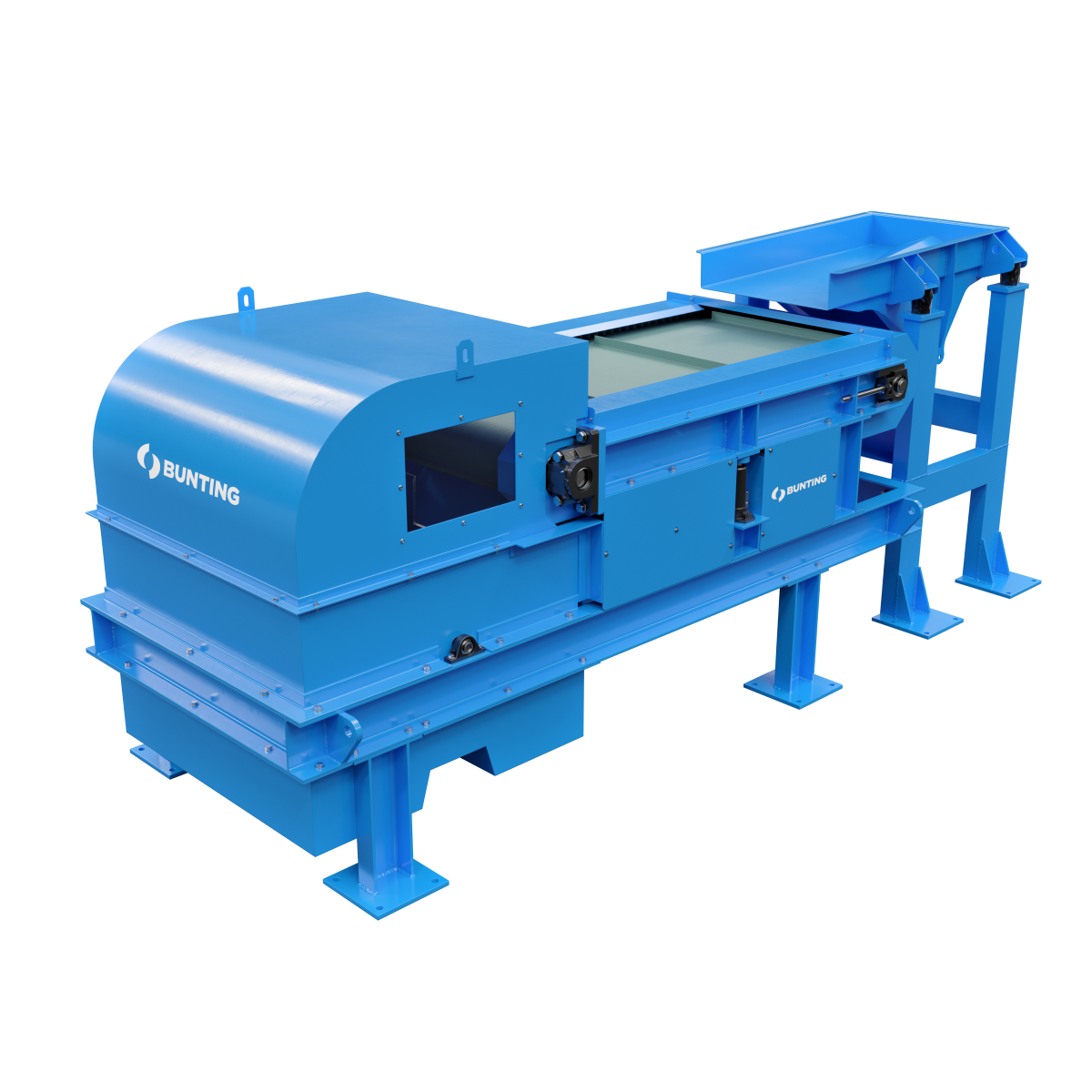
CONCENTRIC ROTOR
Eco Concentric (ECO)
For household and commercial waste with larger non-ferrous pieces.
Detect and reject ferrous and non-ferrous contaminants reliably, safeguarding product integrity and equipment performance.
Magnet sourcing, engineering, manufacturing, and assemblies of permanent magnets for automotive, medical, motors, sensors & more
Protect crushers and conveyors from damaging tramp metal in harsh aggregate, mining, and biomass environments.
Detect and remove ferrous, non-ferrous, and stainless steel contaminants efficiently from ceramic products.
Identify and remove ferrous and para-magnetic contaminants from battery materials and slurries.
Ensure product safety by effectively removing metal contaminants throughout food and pharmaceutical processing.
Enhance productivity with magnetic conveyors and components designed for the metal stamping and fabrication industry.
Protect processing equipment and recover valuable minerals through effective removal of tramp metal contamination.
Safeguard equipment and ensure purity with leading magnetic separation and metal detection solutions for plastics.
Eliminate metal contamination from powders and bulk solids to prevent damage and downtime.
Deliver superior print quality, durability, and reliability with precision magnetic cylinders and bases for decorating applications.
NON-FERROUS METAL RECOVERY
Recover conductive non-ferrous metals from mixed material streams.
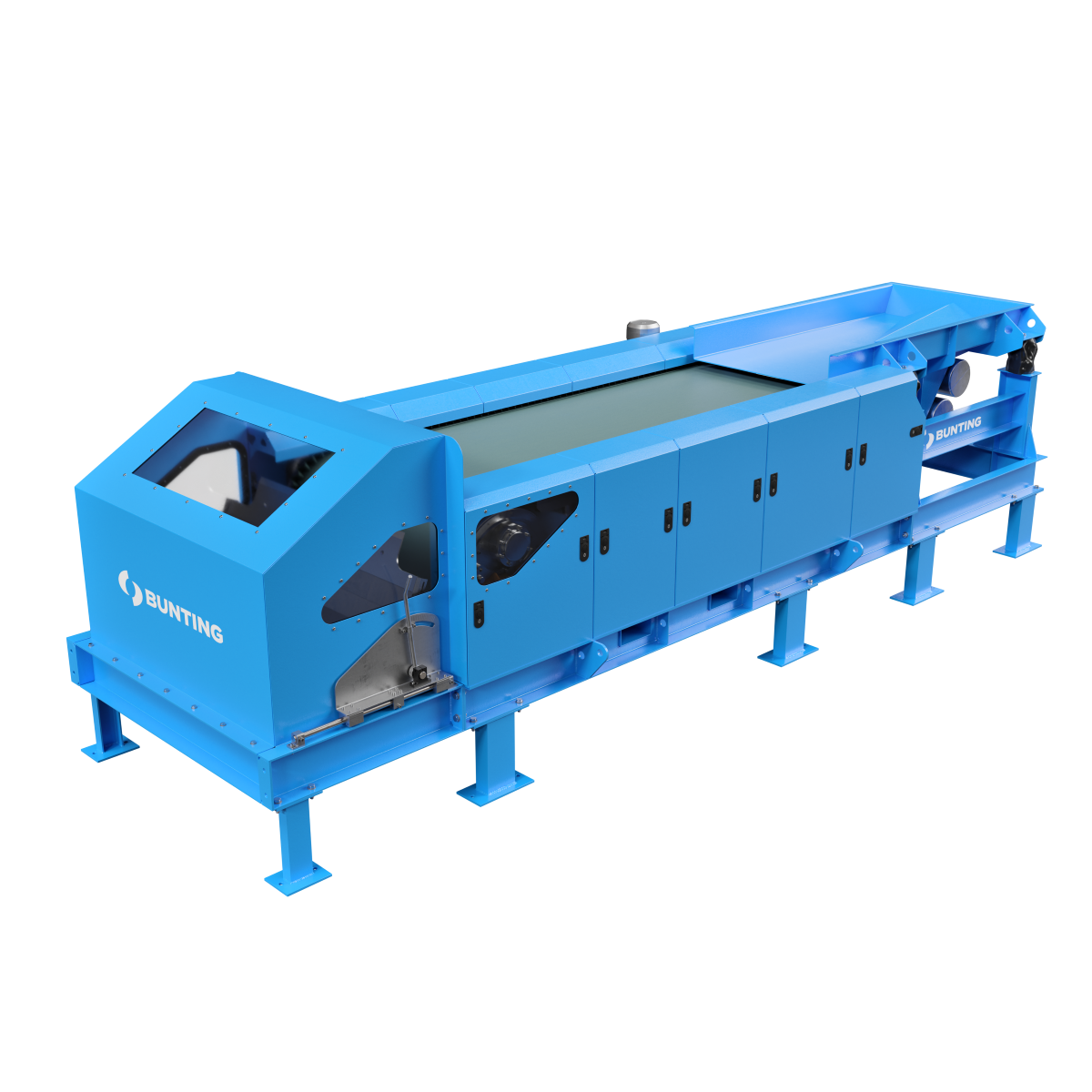
A high-speed magnetic rotor repels aluminum, copper and zinc away from non-conductive material. Bunting offers four configurations for fines, mixed recyclables and general waste streams.
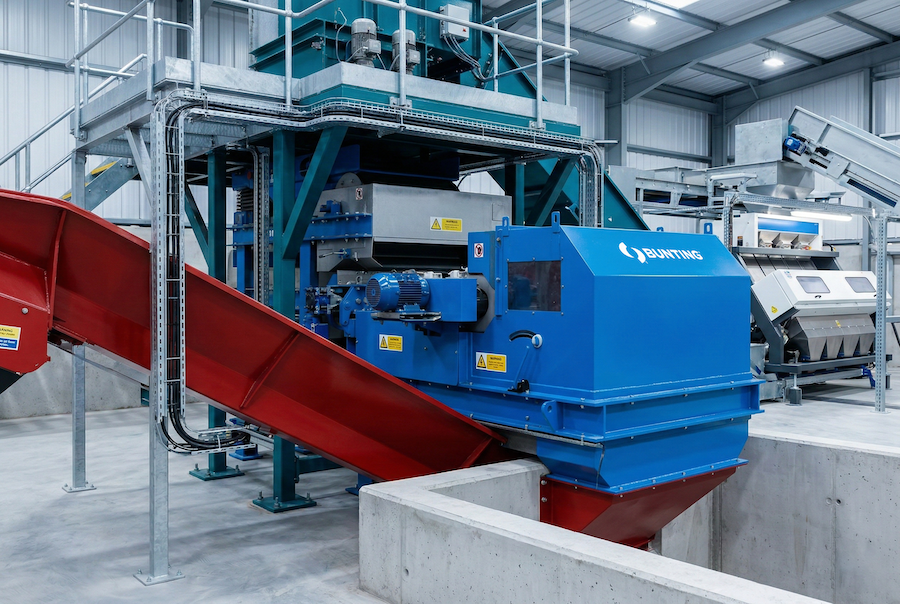
MATCH THE EQUIPMENT TO YOUR PROCESS
Eddy current separators recover conductive non-ferrous metals from prepared material streams. Common applications include:
Remove ferrous material before any eddy current model. Bunting can supply an upstream Rare Earth Drum Magnet to remove ferrous particles, including fines, and help protect the belt and rotor shell. Share feed size, throughput and target metals when discussing your line.
Compare the configurations
Start with particle size and feed rate, the metals you want to recover, and the purity your line needs. Use the chart to shortlist a model, then confirm performance with your material.
Swipe sideways to compare all four models.
| Feature | Eco Concentric (ECO) | High-Intensity Concentric (HIC) | High-Intensity Eccentric (HIE) | High-Frequency Eccentric (HIFE) |
|---|---|---|---|---|
| Consider For | Household and commercial waste | Mixed recyclables, wood and glass | Electronic scrap and granulated plastics | Fine electronic scrap and shredded battery material |
| Typical Feed Size | 20 mm and larger0.79 in and larger | 10 mm and larger0.39 in and larger | 3 mm and larger0.12 in and larger | 1 mm and larger0.04 in and larger |
| Rotor Diameter | 190 mm7.5 in | 300 mm11.8 in | 190 mm7.5 in | 500 mm19.7 in |
| Magnetic Poles | 12 | 24 | 24 | 30 |
| Belt Widths | 750 to 1,250 mm29.5 to 49.2 in | 300 to 2,000 mm11.8 to 78.7 in | 300 to 1,250 mm11.8 to 49.2 in | 1,000 to 2,000 mm39.4 to 78.7 in |
| Rotor Design | Concentric | Concentric | Eccentric | Eccentric |
Imperial dimensions are approximate. Feed size and belt width are model dependent. Confirm project specifications and expected performance with Bunting.
CONCENTRIC ROTOR
For household and commercial waste with larger non-ferrous pieces.
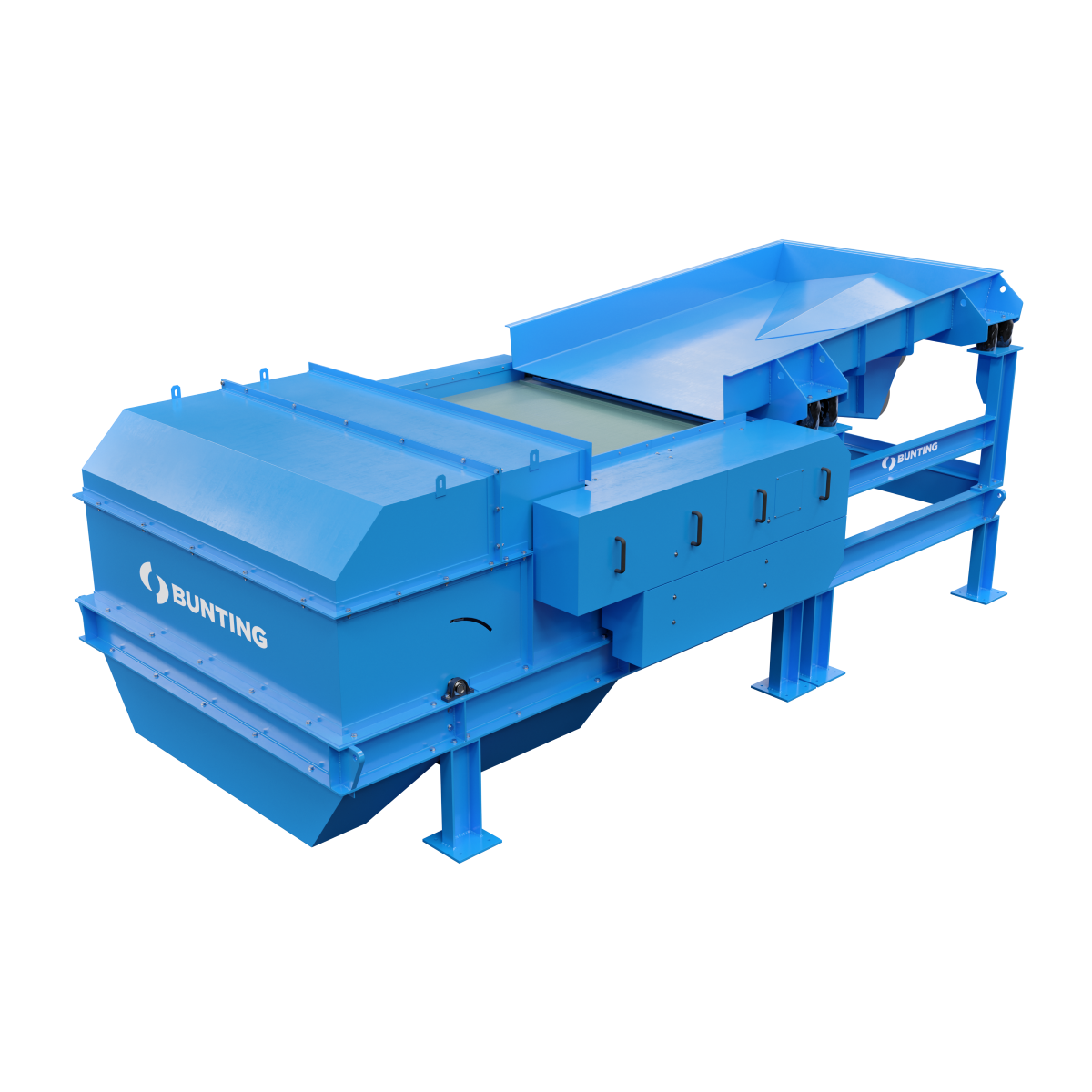
CONCENTRIC ROTOR
For mixed recyclables, wood and glass with coarser metal fractions.
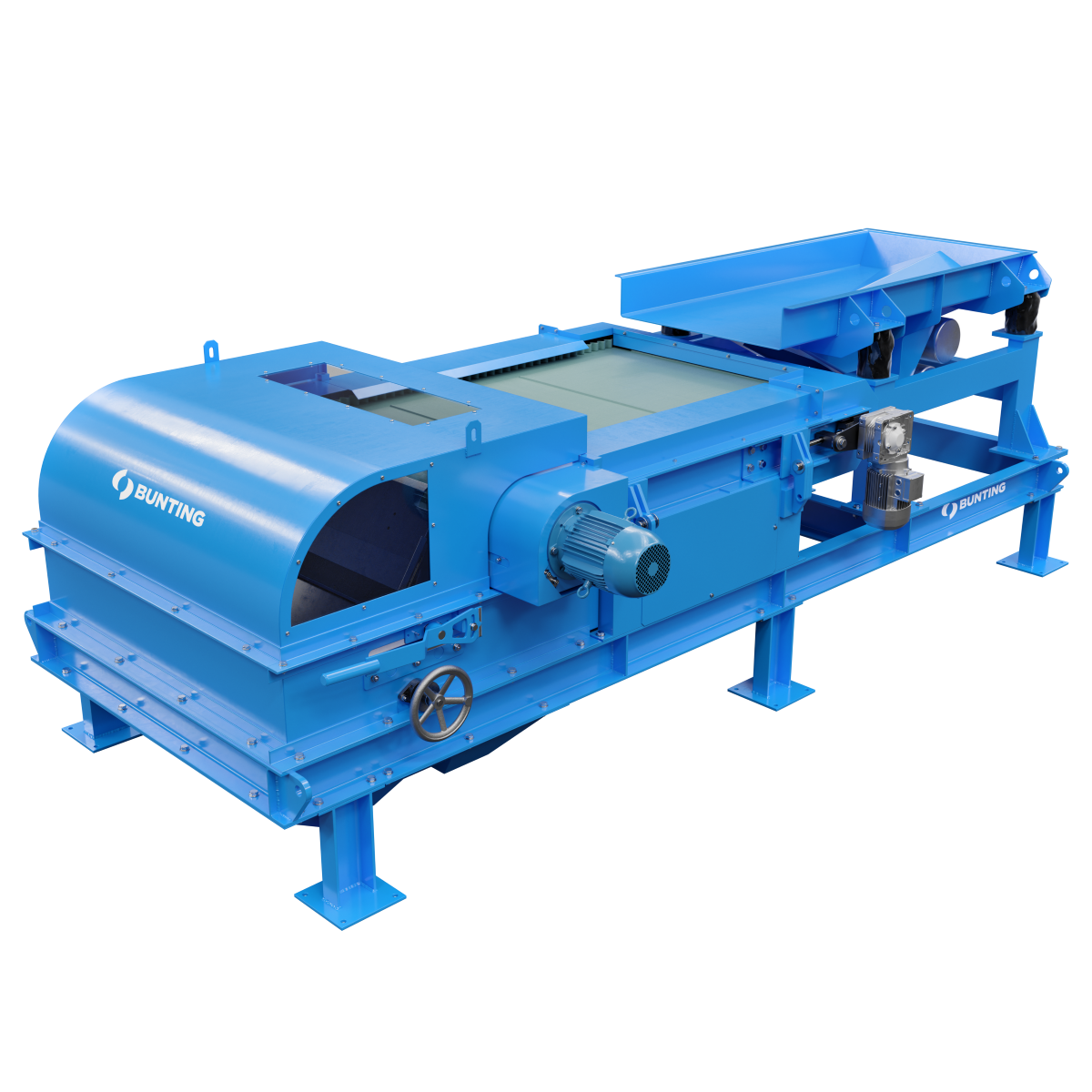
ECCENTRIC ROTOR
For electronic scrap, granulated plastics and screened fines.
ECCENTRIC ROTOR
For fine electronic scrap and shredded battery material.
BEYOND THE ROTOR
Choose the magnetic field
Both designs need an even feed and a splitter adjusted for the material.
The process
The changing magnetic field induces electrical currents in conductive particles. The resulting repulsive force sends those particles beyond the normal drop path, where an adjustable splitter divides the streams.
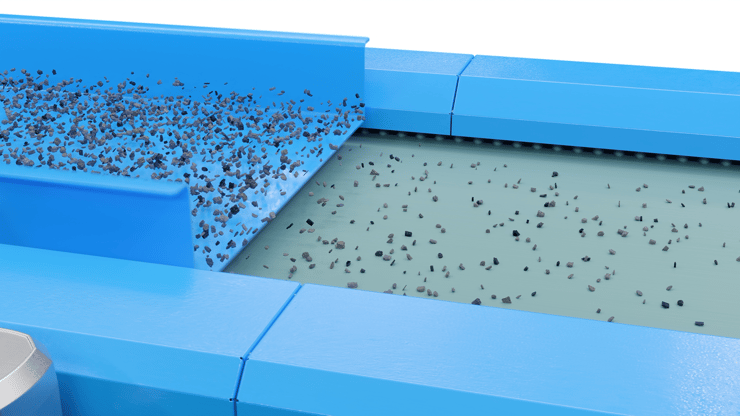
A belt conveyor presents a consistent layer of material to the high-speed magnetic rotor.
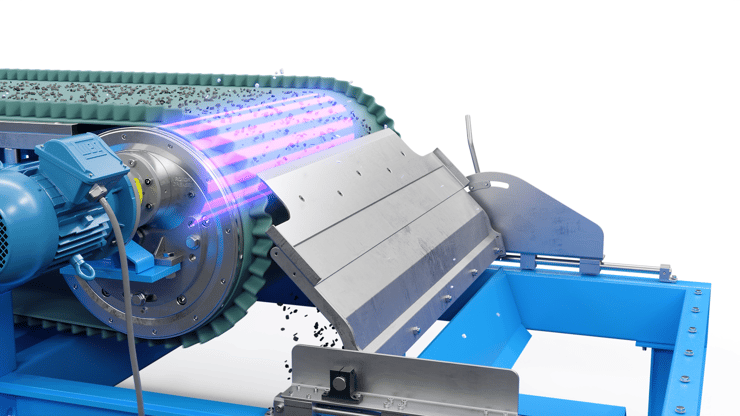
The changing field induces currents in conductive particles, projecting non-ferrous metals forward.
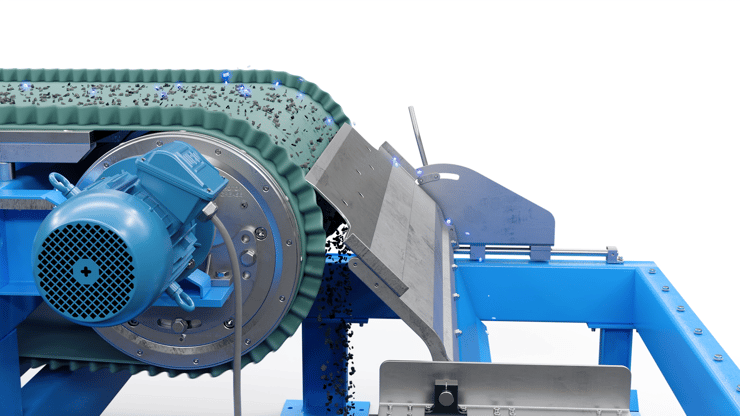
An adjustable splitter collects recovered metal separately from the remaining material stream.
Explore the product
Browse installation and application photos first. Open the model renders to inspect individual configurations.
Showing Application Photos
See The Equipment In Motion
Watch Bunting's High-Frequency Eccentric separator animation.
Application Review And Equipment Inquiry
Tell us what you process and the non-ferrous metals you need to recover. A Bunting application engineer can review equipment fit, configuration and whether a material trial would help confirm the right model.
To compare proposals, request a configuration-specific drawing and specification sheet that state the expected throughput for your feed, electrical requirements, service clearance and test assumptions.
If the form does not load, open it in a new tab.
It separates conductive non-ferrous metals such as aluminum, copper and zinc from non-conductive material. Ferrous metal is typically removed upstream with magnetic separation.
Yes. Ferrous particles, particularly fines, should be removed first because they can damage the belt and rotor shell. Bunting can supply an upstream Rare Earth Drum Magnet with any of the four models. Share your existing separation steps when discussing the line.
Start with particle size, conductivity, feed rate, material presentation and the recovered-metal purity you need. HIFE and HIE target finer fractions; HIC and ECO suit coarser mixed streams. Bunting can confirm fit with your material.
Yes. Belt widths, chutes, support structures and upstream ferrous separation can be configured for new or existing lines. Share layout and throughput details during selection.
Bunting offers laboratory-scale trials at its UK Recycling Test Facility. Contact the application team to confirm sample requirements and availability.