Skip to content
Get in touch with us at our toll-free number 1-800-835-2526 or request a quote here:    Request Quote
Industries

Energy Storage and Battery

Magnetic Separation | Metal Detectors | Conveyors

Magnetic Separation, Metal Detection, and Conveying for Battery Storage and Recycling

Recover Materials. Protect Equipment. Keep Operations Safe and Efficient.

Bunting equipment helps battery manufacturers and recyclers recover valuable materials, protect processing equipment, and maintain safe, efficient operations.

Our systems are used in battery recycling and energy storage operations to:

  • Remove ferrous and non-ferrous metal contamination from shredded battery material
  • Protect critical equipment such as shredders, granulators, separators, and processing lines
  • Improve the purity of battery-grade lithium carbonates and graphite
  • Maintain safe, automated material flow through each stage of the recycling process
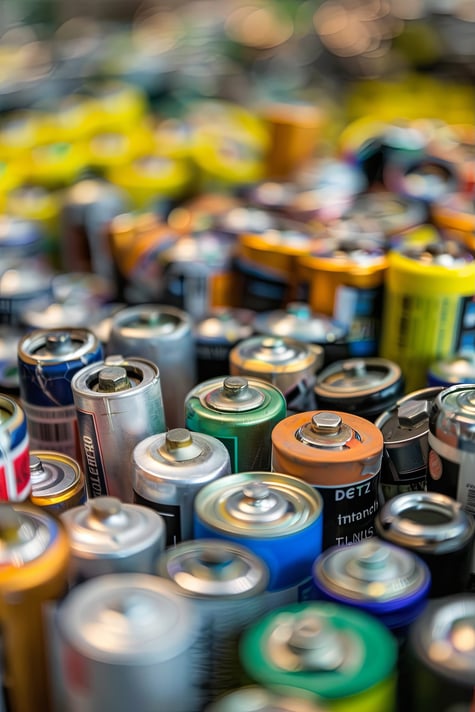
Battery Recycling web


Battery Storage


Protect Equipment and Improve Material Recovery

Metal contamination in battery recycling can reduce recovery rates, damage processing equipment, and create serious safety risks. Bunting magnetic separators and metal detectors remove ferrous, non-ferrous, and weakly magnetic metals to protect equipment and improve material purity.

Battery Separation and Material Handling Solutions

Bunting supplies systems for processing battery materials, from shredded EV cells to manufacturing scrap. Magnetic separation, metal detection, and material handling equipment can be configured for mixed feedstocks, material recovery, and downstream processing.

Solutions

Magnetic Separation

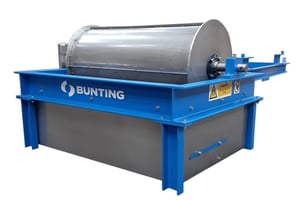
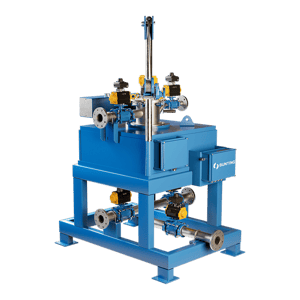
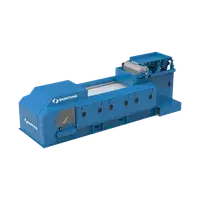
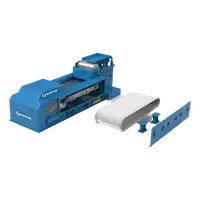
Our range of separation equipment removes ferrous, non-ferrous, and weakly magnetic metals such as steel casings, battery tabs, and shredded components from mixed battery feedstock. These systems are integrated at critical points like conveyor transitions, material infeed, or downstream of shredders to protect equipment, improve purity, and maximize recovery rates of valuable battery metals.

Metal Detection

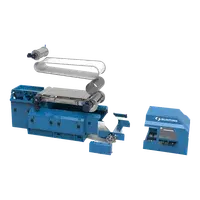
To identify ferrous tramp contamination, such as battery terminal posts. Designed for rugged recycling environments, these detectors ensure maximum safety and purity; whether mounted inline with conveyors, or integrated into automated sorting lines.

Conveyors

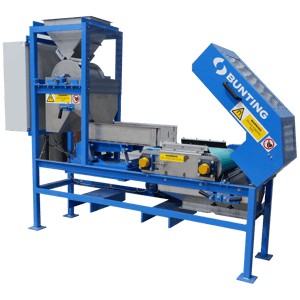
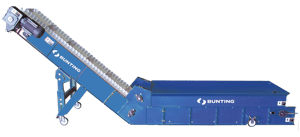
Bunting conveyors handle active materials, mixed scrap, and deconstructed battery cells with controlled material flow. Corrosion-resistant, sealed, and liquid-tight designs help contain electrolyte leaks and reduce manual handling. Conveyors can also integrate with metal detection systems to support efficient processing from intake through final sorting.

Industries Served

Battery Recycling

Magnetic separators and metal detectors are essential in battery recycling facilities to recover valuable metals and remove contaminants from shredded EV batteries, consumer electronics, and manufacturing scrap. These systems improve recovery rates and reduce equipment failure.

EV & Automotive

Battery packs from electric and hybrid vehicles are processed using integrated conveying, separation, and detection systems. These technologies safeguard equipment from ferrous and non-ferrous debris while helping reclaim critical materials like lithium, nickel, and cobalt for reuse in new battery manufacturing.

Battery Manufacturing

Our separators ensure battery-grade material quality in lithium-ion, EV, and automotive battery manufacturing, while reducing waste in the production process.

Electronics & E-Waste

Consumer electronics and small-format batteries are processed using magnetic separation systems that recover aluminum, copper, cobalt, nickel, gold and other valuable materials. Our solutions lead to improved purity standards for more efficient downstream chemical processing.


Frequently Asked Questions

How can Bunting equipment help reduce lithium battery fire risks?

Returned products and e-waste can contain undeclared or damaged lithium-ion batteries. If these items enter shredders, crushers, or compactors, they can create a fire, explosion, or toxic-gas risk.

Bunting equipment can support upstream risk reduction by detecting associated metallic components, removing ferrous housings and tabs, and routing suspect material for isolation before high-pressure processing. System design and performance depend on the material stream and application.

How effective is magnetic separation in battery recycling?

Magnetic separation removes ferrous and weakly magnetic metals from shredded lithium-ion, EV, and automotive battery feedstocks. It is often combined with other separation technologies, including eddy current, rare earth roll, and electrostatic separation, to improve recovered-stream purity and downstream processing efficiency.

Why are specialized conveyors used in battery processing?

Specialized conveyors help control material flow, contain leaks, and protect battery components during processing. Depending on the application, roller and screw conveyors can maintain throughput and product orientation for automated sorting.

Which battery types and materials can Bunting equipment process?

Bunting supplies separation equipment for major battery chemistries, including lithium-ion batteries used in EVs and electronics, lithium iron phosphate (LiFePO4), nickel-metal hydride (NiMH), and lead-acid batteries. Systems can also support the recovery of cobalt, nickel, copper, aluminum, graphite, and black mass.

Can Bunting battery processing systems be customized?

Systems can be configured for pilot lines or full industrial operations and can be retrofitted or scaled as requirements change. Available options include automation, remote monitoring, and support for regulatory compliance.

cta-bkg

Talk to an Application Engineer

Not sure what you need? Let’s talk through your application and identify the right solution.

Animation