

Updated for 2026: Magnetic separation technology continues to play a critical role in mineral processing, improving product purity, recovery rates, and operational efficiency across mining, ceramics, recycling, and critical mineral applications.
Magnetic separation is one of the most widely used and effective methods for removing unwanted ferrous contamination and separating valuable minerals during mineral processing and beneficiation operations. From iron ore concentration to silica sand purification and rare earth mineral recovery, magnetic separators help producers improve product quality, maximize recovery rates, and protect downstream processing equipment.
Modern mineral processing operations face increasing pressure to improve efficiency, reduce contamination, and achieve higher purity levels. As demand grows for battery minerals, rare earth materials, ultra-pure silica, and recycled materials, advanced magnetic separation systems are becoming even more important across mining and industrial processing sectors.
This guide explains how magnetic separators work, the different separator types used in mineral processing, and how modern magnetic separation technology improves mineral recovery and product purity across a wide range of applications.
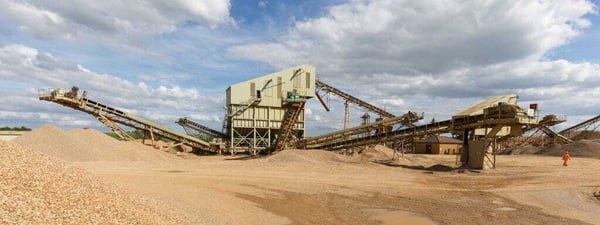
Magnetic Separators and Metal Detectors for Mining and Mineral Processing
Contents
- What Is Magnetic Separation in Mineral Processing?
- Magnetic Properties of Minerals
- Why Magnetic Susceptibility Matters
- How Magnetic Separators Work
- Control Variables in Magnetic Separation
- Types of Magnetic Separators Used in Mineral Processing
- Minerals Commonly Processed Using Magnetic Separation
- Modern Applications of Magnetic Separation
- Benefits of Magnetic Separation in Mineral Processing
- Wet vs Dry Magnetic Separation
- How to Choose the Right Magnetic Separator
- Common Magnetic Separation Challenges
- Frequently Asked Questions
- The Future of Magnetic Separation in Mineral Processing
- Material Testing and Separation Analysis
What Is Magnetic Separation in Mineral Processing?
Magnetic separation is a process used to separate magnetic and paramagnetic materials from non-magnetic materials using a magnetic field. In mineral processing, magnetic separators are commonly used to recover valuable minerals, remove tramp metal contamination, and improve overall product purity.
The process works by exploiting differences in magnetic susceptibility between minerals. Materials that respond to magnetic fields can be separated from non-magnetic materials as the feed material passes through or around a magnetic separator.
Magnetic separation is widely used throughout the mining and mineral beneficiation industries for applications including:
- Iron ore concentration
- Silica sand purification
- Feldspar processing
- Rare earth mineral recovery
- Heavy mineral sands processing
- Ceramic raw material purification
- Recycling and urban mining
- Battery mineral processing
Depending on the application, magnetic separation systems can operate in wet or dry processing environments and can be configured for low, medium, high, or ultra-high magnetic intensity separation.
Magnetic Properties of Minerals
Minerals respond differently when exposed to magnetic fields. Understanding these magnetic properties is essential when selecting the correct magnetic separation equipment for mineral processing applications.
The three main magnetic properties of minerals are paramagnetism, ferromagnetism, and diamagnetism.
Paramagnetic Minerals
Paramagnetic minerals are only slightly affected by an applied magnetic field. These minerals are attracted toward areas of higher magnetic intensity and can be separated using high intensity magnetic separators.
Examples of paramagnetic minerals include:
- Hematite
- Ilmenite
- Chromite
- Wolframite
- Manganese minerals
Because paramagnetic minerals have relatively low magnetic susceptibility, high intensity or ultra-high intensity magnetic separators are typically required for effective separation.
Ferromagnetic Minerals
Ferromagnetic minerals are strongly attracted to magnetic fields and are capable of achieving a high degree of magnetic alignment.
Examples of ferromagnetic minerals include:
- Magnetite
- Pyrrhotite
- Metallic iron
These minerals are easily separated using low intensity magnetic separators such as drum magnets and pulley magnets.
Ferromagnetic materials typically produce the strongest magnetic response and are the easiest minerals to recover magnetically.
Diamagnetic Minerals
Diamagnetic minerals are very weakly repelled by magnetic fields. When exposed to a magnetic field, diamagnetic materials develop an induced magnetic moment in the opposite direction to the applied magnetic field.
Examples of diamagnetic minerals include:
- Silica
- Quartz
- Feldspar
- Calcite
Because diamagnetic minerals exhibit minimal magnetic response, magnetic separation systems are typically used to remove magnetic contaminants from these materials rather than directly separating the minerals themselves.
Why Magnetic Susceptibility Matters
Magnetic susceptibility determines how strongly a mineral responds to a magnetic field and directly influences separator selection, magnetic field strength requirements, and overall separation efficiency.
In mineral processing operations, understanding magnetic susceptibility helps engineers select the most effective magnetic separator for achieving target recovery rates and product purity levels.
How Magnetic Separators Work
Magnetic separators generate magnetic fields that attract and separate magnetic particles from non-magnetic materials. As material moves through the separator, magnetic particles are attracted toward the magnetic source while non-magnetic materials continue along the normal material flow path.
The effectiveness of magnetic separation depends on several factors, including:
- Magnetic susceptibility of the material
- Particle size
- Moisture content
- Feed rate
- Magnetic field strength
- Material distribution
- Separator design
Different magnetic separator designs are optimized for specific applications, material characteristics, and separation objectives.
For example:
- Drum magnets are commonly used for wet iron ore processing
- Rare earth roll separators are ideal for dry high-intensity applications such as silica sand purification
- Wet high intensity magnetic separators (WHIMS) are used for fine weakly magnetic minerals
- Overband magnets remove tramp ferrous contamination from conveyors and crushers
Control Variables in Magnetic Separation
Achieving efficient magnetic separation depends on several key feed and machine operating variables. Understanding and controlling these factors helps optimize recovery rates, product purity, and overall separator performance.
The main control variables influencing magnetic separation efficiency include feed characteristics and separator design parameters.
Feed Variables
Volume of Particle (V)
Particle volume is primarily influenced by the feed particle size distribution. Larger particles experience greater magnetic force, while extremely fine particles may require higher intensity magnetic fields or specialized separator designs for effective recovery.
Proper particle liberation and consistent feed sizing are essential for maximizing separation efficiency.
Magnetic Susceptibility of Particle (K)
Magnetic susceptibility describes how strongly a mineral responds to a magnetic field. This characteristic depends on:
- Mineral type
- Degree of mineral liberation
- Mineral composition
- Particle purity
Minerals with higher magnetic susceptibility are easier to separate, while weakly magnetic minerals require high intensity or ultra-high intensity magnetic separation systems.
Machine Operation Variables
Magnetic Field Strength of Separator (H)
Magnetic field strength is a key machine design parameter that determines how strongly magnetic particles are attracted toward the separator.
Higher magnetic field strengths are typically required for:
- Weakly magnetic minerals
- Fine particle separation
- High-purity applications
- Rare earth mineral processing
- Silica purification
Magnetic Field Gradient of Separator (H/R)
The magnetic field gradient influences the rate of change in magnetic intensity across the separation zone. Strong magnetic gradients improve the separator’s ability to attract and recover fine or weakly magnetic particles.
Separator design plays a major role in achieving the required magnetic field gradient for a specific application.
Magnetic Force Equation
The magnetic force generated on a paramagnetic particle in a magnetic separator can be expressed as:
F(m) = V.K.H.H/R
Where:
- F(m) = Magnetic force acting on the particle
- V = Volume of the particle
- K = Magnetic susceptibility of the particle
- H = Magnetic field strength
- H/R = Magnetic field gradient
For successful magnetic separation, the magnetic force must be sufficient to move the paramagnetic mineral away from its natural trajectory after leaving the separator or lift the particle from a conveyor belt against gravitational forces in disc-type magnetic separators.
Optimizing these control variables is essential for maximizing separation efficiency, improving mineral recovery, and achieving target product purity levels in mineral processing operations.
Types of Magnetic Separators Used in Mineral Processing
Drum Magnets
Magnetic drum separators are commonly used in mineral processing plants to separate ferrous and strongly magnetic materials from bulk material streams. They are widely used in iron ore concentration and wet processing operations.
Drum magnets can be configured for concurrent, counter-rotation, or counter-current operation depending on the application requirements.
Common applications include:
- Magnetite recovery
- Iron ore concentration
- Heavy media recovery
- Ferrous contamination removal
- Mineral beneficiation circuits
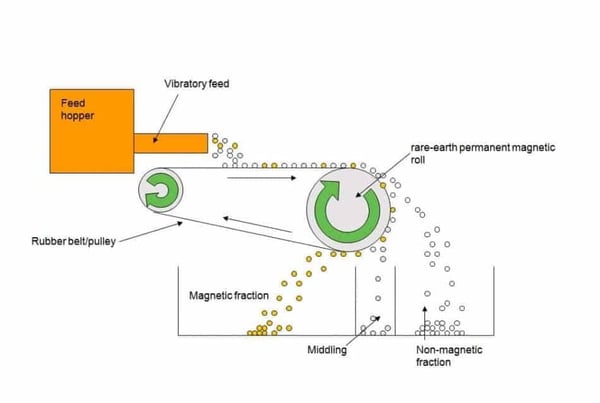
Rare Earth Roll Separators
Rare earth roll separators generate extremely high magnetic field strengths and are used for separating weakly magnetic materials from non-magnetic materials.
These separators are commonly used in:
- Silica sand purification
- Feldspar processing
- Glass raw materials
- Ceramic minerals
- Garnet separation
- Mineral sands processing
Rare earth roll separators are particularly effective for removing iron contamination from industrial minerals where product purity is critical.
Overband Magnets
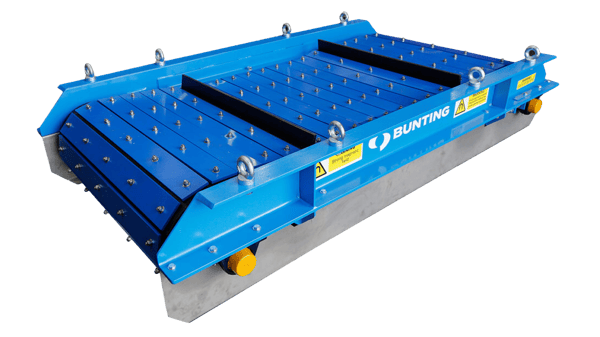
Overband magnetic separators are installed above conveyors to remove tramp ferrous contamination from conveyed material.
In mineral processing plants, overband magnets help protect:
- Crushers
- Grinding mills
- Screens
- Conveyors
- Downstream processing equipment
Removing tramp metal reduces equipment damage, minimizes downtime, and improves overall plant reliability.
Magnetic Pulley Separators
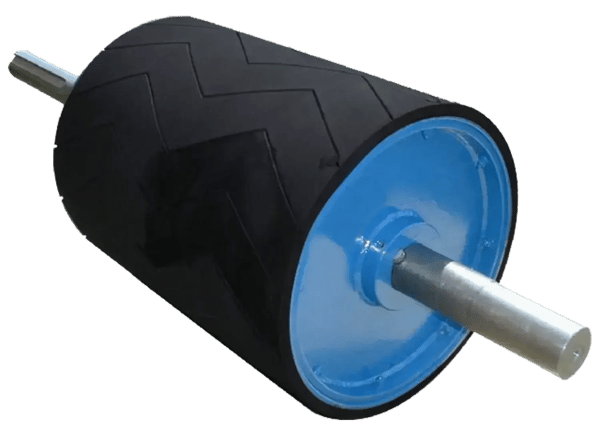
Magnetic pulleys replace standard conveyor head pulleys and automatically remove ferrous materials from conveyed product streams.
These separators are often used in:
- Aggregate processing
- Mining operations
- Recycling plants
- Bulk material handling systems
Magnetic pulleys provide continuous automatic separation with minimal maintenance requirements.
Wet High Intensity Magnetic Separators (WHIMS)
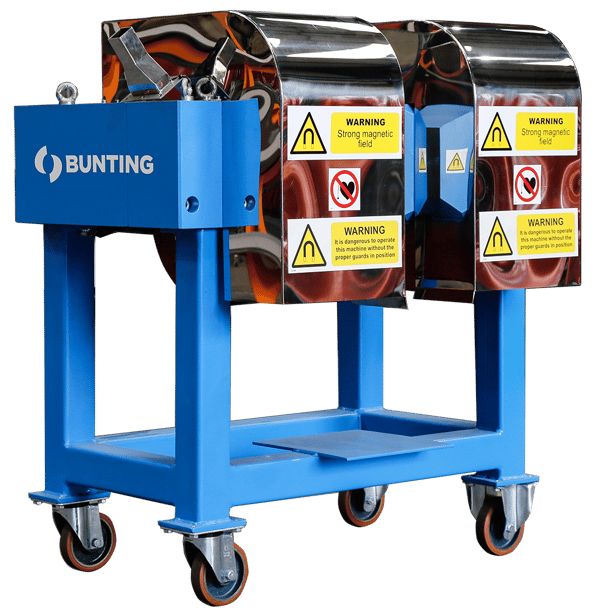
Wet high intensity magnetic separators are designed for separating fine weakly magnetic minerals from slurries and wet process streams.
WHIMS technology is commonly used for:
- Hematite recovery
- Ilmenite processing
- Rare earth mineral recovery
- Fine iron ore beneficiation
- Kaolin clay purification
- Silica purification
These separators generate significantly stronger magnetic fields than conventional drum magnets and are ideal for fine particle applications requiring high separation efficiency.
Electromagnetic Filters
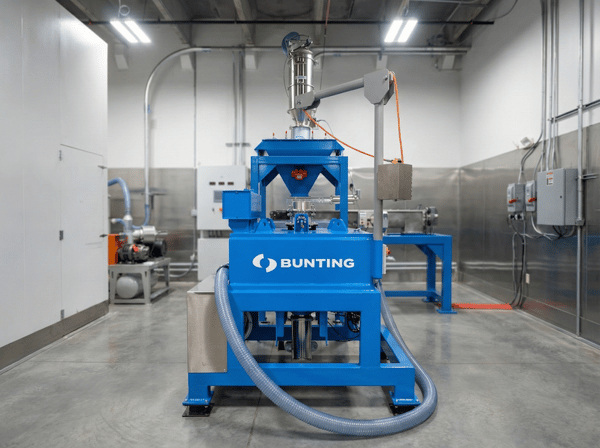
Electromagnetic filters are used for ultra-fine purification applications where extremely high product purity is required.
Common applications include:
- Ceramic slurries
- Battery materials
- High-purity silica
- Chemical processing
- Specialty minerals
Electromagnetic filters can remove extremely fine ferrous contamination that conventional magnetic separators may miss.
Comparison of Magnetic Separator Types
| Separator Type | Best Application | Wet/Dry | Magnetic Strength |
|---|---|---|---|
| Drum Magnet | Iron Ore Recovery | Wet | Low Intensity |
| Rare Earth Roll Separator | Silica Sand & Feldspar | Dry | High Intensity |
| WHIMS | Fine Weakly Magnetic Minerals | Wet | Ultra High Intensity |
| Overband Magnet | Tramp Metal Removal | Dry | Medium Intensity |
| Magnetic Pulley | Conveyor Separation | Dry | Medium Intensity |
| Electromagnetic Filter | Ultra-Pure Materials | Wet | Ultra High Intensity |
Minerals Commonly Processed Using Magnetic Separation
Magnetic separation technology is used across a wide range of mineral processing applications.
Iron Ore
Magnetic separators are extensively used to recover magnetite and improve iron ore grades during beneficiation operations.
Silica Sand
High intensity magnetic separators remove iron contamination from silica sand used in glass manufacturing and industrial applications.
Feldspar
Magnetic separation improves feldspar purity for ceramics and glass production by removing iron-bearing contaminants.
Rare Earth Minerals
Advanced magnetic separation systems help recover valuable rare earth minerals used in electronics, renewable energy systems, and electric vehicle technologies.
Heavy Mineral Sands
Mineral sands processing operations use magnetic separation to recover ilmenite, garnet, rutile, and other valuable minerals.
Battery Minerals
Modern battery production requires ultra-high purity raw materials. Magnetic separators help remove contamination from lithium, graphite, and other battery minerals.
Modern Applications of Magnetic Separation
Battery Mineral Processing
Demand for electric vehicles and energy storage systems is driving increased demand for battery minerals such as lithium, graphite, cobalt, and nickel.
Magnetic separators help remove ferrous contamination and improve raw material purity during battery mineral processing operations.
Rare Earth Processing
Rare earth elements are essential for electric motors, renewable energy systems, and advanced electronics. Magnetic separation plays an important role in recovering and purifying these valuable minerals.
Ultra-Pure Silica Production
High-purity silica is used in glass manufacturing, solar panels, electronics, and semiconductor production. High intensity magnetic separation helps achieve extremely low iron contamination levels.
Recycling and Urban Mining
Magnetic separation systems are increasingly used in recycling facilities to recover metals and process valuable secondary raw materials from electronic waste and industrial recycling streams.
Benefits of Magnetic Separation in Mineral Processing
Magnetic separation provides several important operational and economic benefits.
Improved Product Purity
Removing unwanted ferrous contamination improves final product quality and market value.
Increased Recovery Rates
Efficient magnetic separation systems help recover valuable minerals that might otherwise be lost during processing.
Reduced Equipment Damage
Removing tramp metal protects crushers, mills, and downstream processing equipment from costly damage.
Lower Operating Costs
Automated magnetic separation reduces labor requirements, minimizes downtime, and improves overall plant efficiency.
Improved Downstream Processing
Cleaner material streams improve the performance of downstream processing equipment and reduce contamination-related issues.
Wet vs Dry Magnetic Separation
| Wet Magnetic Separation | Dry Magnetic Separation |
|---|---|
| Used for slurries and fine particles | Used for free-flowing dry materials |
| Higher recovery efficiency | Lower operating complexity |
| Common in iron ore beneficiation | Common in silica and mineral sands |
| Suitable for fine particle separation | Suitable for coarse material separation |
Wet and dry magnetic separation systems are selected based on material characteristics, process requirements, and desired separation efficiency.
How to Choose the Right Magnetic Separator
Selecting the correct magnetic separator depends on several key process factors.
Material Characteristics
Important considerations include:
- Particle size
- Moisture content
- Magnetic susceptibility
- Material density
- Feed consistency
Processing Requirements
System selection should also consider:
- Required purity levels
- Throughput requirements
- Recovery targets
- Available installation space
- Maintenance requirements
Magnetic Intensity Requirements
Different minerals require different magnetic field strengths for effective separation. Low intensity systems are suitable for strongly magnetic materials, while weakly magnetic minerals require high intensity or ultra-high intensity magnetic separation systems.
Common Magnetic Separation Challenges
Poor Recovery Rates
Low recovery rates can result from improper magnetic field strength, inconsistent feed rates, or poor material distribution.
Excessive Equipment Wear
Abrasive materials and tramp metal contamination can increase wear on processing equipment if magnetic separation systems are not properly configured.
Product Contamination
Insufficient magnetic intensity or improper separator selection may allow unwanted contamination to remain in the final product.
Fine Particle Separation Difficulties
Ultra-fine particles may require specialized high intensity magnetic separation systems such as WHIMS or electromagnetic filters.
The Future of Magnetic Separation in Mineral Processing
As demand increases for critical minerals, battery materials, rare earth elements, and ultra-pure industrial minerals, magnetic separation technology will continue to play a vital role in modern mineral processing operations.
Advances in magnetic materials, separator design, automation, and process optimization are helping mineral processors achieve higher recovery rates, improved product purity, and lower operating costs.
From traditional iron ore beneficiation to emerging battery mineral applications, magnetic separation remains one of the most effective and efficient technologies available for mineral processing and material purification.
Material Testing and Separation Analysis
Selecting the correct magnetic separator for a mineral processing application requires a detailed understanding of the material characteristics, magnetic susceptibility, particle size distribution, and target product purity levels.
Bunting operates a dedicated Material Testing Laboratory where mineral samples can be analyzed and tested using a range of magnetic separation technologies. Laboratory testing helps determine the most effective separation method, magnetic field strength, and equipment configuration for a specific application.
Material testing can help identify:
- Separator suitability
- Expected recovery rates
- Product purity improvements
- Optimal magnetic field strength
- Separation efficiency
- Process optimization opportunities
Testing is particularly valuable for complex mineral processing applications involving weakly magnetic minerals, fine particle separation, ultra-pure materials, or high-value critical minerals.
By conducting controlled laboratory testing before full-scale installation, mineral processors can reduce operational risk, improve equipment selection, and optimize long-term processing performance.
To learn more about Bunting’s material testing capabilities or discuss a mineral processing application, contact our team of magnetic separation specialists.