
Magnetic Separation in Mining and Mineral Processing
Updated for 2026: Magnetic separation remains essential in mining and mineral processing, helping remove tramp metal, protect crushers and conveyors, recover valuable minerals, and improve product purity.
Magnetic separators are widely used in mining and mineral processing operations. However, the term “magnetic separator” covers a broad range of specialist equipment designed to separate different materials, from large tramp ferrous metal to weakly magnetic and paramagnetic minerals.
In mining and mineral processing, magnetic separators are generally used for two main purposes: removing tramp ferrous metal to protect equipment, and separating magnetic minerals during mineral beneficiation or ore dressing.
Contents
- Magnetic Separation in Mining
- Magnetic Separators Removing Tramp Ferrous Metal
- High-Intensity Magnetic Separators for Mineral Processing
- Dry Mineral Processing Applications
- Magnetic Disc Separators
- High-Intensity Electromagnetic Filter for Mineral Slurries
- Extending Mineral Reserves
- Frequently Asked Questions
Magnetic Separation in Mining
Magnetic separation equipment used in mining and mineral processing is broadly divided into two categories.
- Tramp metal removal magnets, which use deep magnetic fields to remove large ferrous metal before crushers, screens, and conveyors are damaged.
- High-intensity mineral separators, which use powerful magnetic fields to separate strong, weak, and paramagnetic minerals from ores and quarried rock.
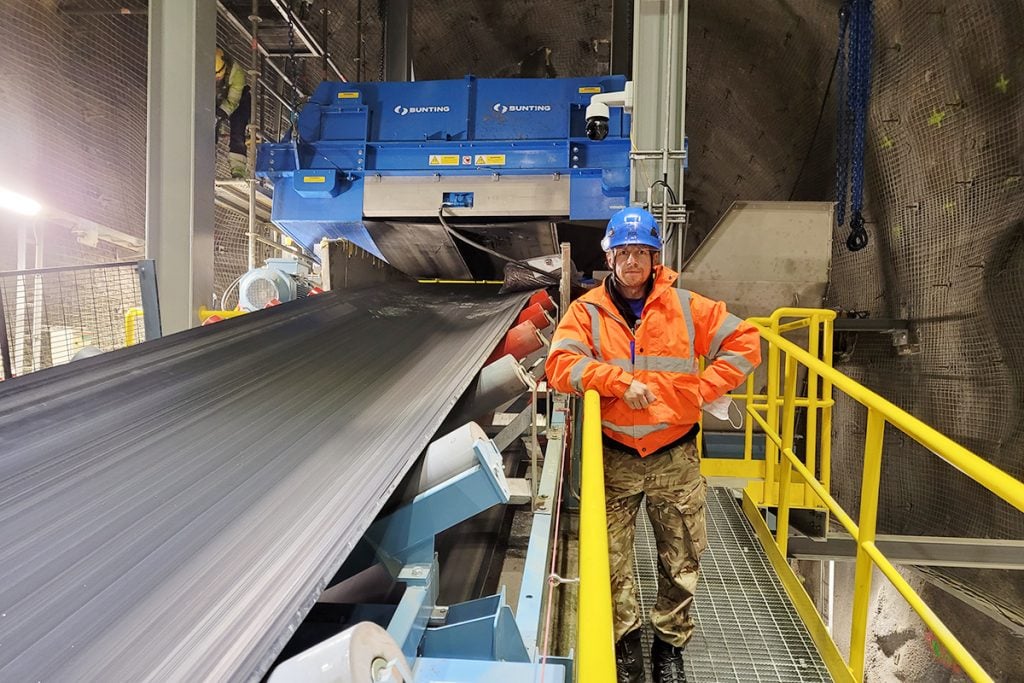
Early in the process, magnetic separators with deep magnetic fields, such as overband magnets, are used to remove tramp ferrous metal and protect processing equipment.
For mineral beneficiation, high-intensity magnetic separators with shallow but powerful magnetic fields are used to recover or purify magnetic and paramagnetic minerals.
Magnetic Separators Removing Tramp Ferrous Metal
Tramp ferrous metal removal takes place at the mine, quarry, and processing plant. Mining and quarrying operations can introduce metal contamination in many forms, including metal bars, digger teeth, nuts, bolts, plate steel, and discarded metal waste.
Magnetic separators remove magnetically susceptible ferrous tramp metal, while metal detectors are often used alongside them to locate non-ferrous metal such as manganese steel.
Magnetic separation equipment is typically installed early in the process before rock or ore is crushed and screened. This reduces the risk of costly damage to crushers, screens, conveyors, and downstream processing equipment.
Where plants have multiple stages of crushing and screening, magnetic separators are often positioned between stages to remove metal liberated during primary crushing.
The correct magnetic separator design depends on the plant configuration, conveyor size, burden depth, and tramp metal risk.
- Permanent and electro overband magnets are suspended above conveyors, either inline or across the belt.
- Electromagnetic overbands are commonly used for wider conveyors, higher tonnages, and deeper burdens.
- Magnetic head pulleys can be used where an overband magnet is difficult to install.
- Drum magnets are used in some ore processing applications where higher magnetic fields are required.
High-Intensity Magnetic Separators for Mineral Processing
High-intensity magnetic separators are used to purify or concentrate non-metallic minerals and magnetic ores.
The correct separator design depends on several material and process factors, including:
- Particle size
- Particle shape
- Mineral composition
- Magnetic susceptibility
- Moisture content
- Processing objective
High-intensity magnetic separation is commonly used to remove weakly magnetic contaminants or recover valuable minerals from mined ore and industrial minerals.
Dry Mineral Processing Applications
For dry mineral processing applications, mineral processors commonly use:
- Rare Earth Roll Magnetic Separators
- Magnetic Disc Separators
- Induced Roll Magnetic Separators
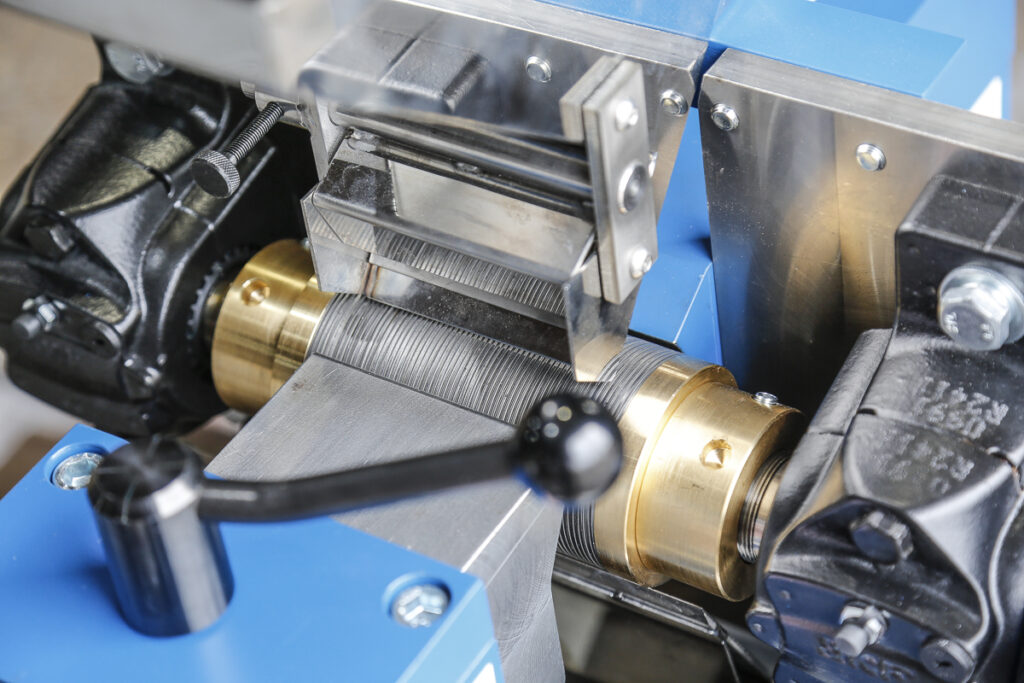
The Induced Roll Magnetic Separator uses electromagnetic fields to generate high-intensity magnetic fields. The Rare Earth Roll Magnetic Separator uses permanent neodymium rare earth magnets to create powerful magnetic separation forces.
These magnetic fields enable the separation of weakly magnetic and paramagnetic minerals, such as mica and iron-coated silica, from non-metallic minerals such as feldspar, silica sand, and zircon.
Once purified, these non-metallic minerals are used in industries including ceramics, glass production, foundries, and specialist industrial mineral applications.
Magnetic Disc Separators
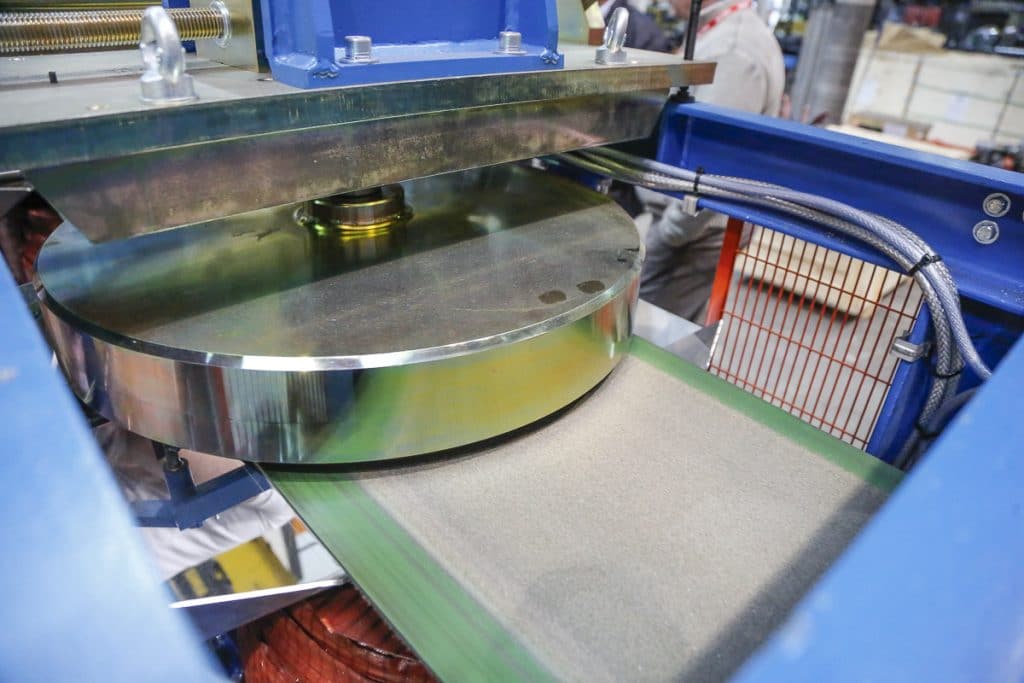
A Magnetic Disc Separator typically features up to three high-intensity electromagnetic discs, each positioned at a different height above a feed conveyor.
The first magnetic disc is set furthest from the feed material to extract the most magnetically susceptible particles. The second and third discs are positioned closer to the material, increasing magnetic force and separating different grades of magnetic material.
By varying the current to each electromagnetic coil, operators can adjust magnetic intensity to suit specific mineral separation objectives.
High-Intensity Electromagnetic Filter for Mineral Slurries
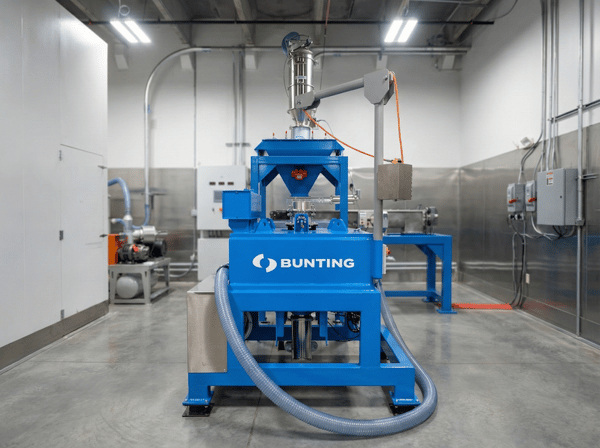
An Electromagnetic Filter is used to remove magnetically susceptible particles from mineral slurries.
The high-intensity background magnetic field, which can reach up to 10,000 Gauss, separates fine iron and paramagnetic minerals from wet process streams.
Electromagnetic Filters consist of an electromagnetic coil positioned around a central hollow core containing a magnetic stainless-steel matrix. The coil generates a high-intensity magnetic field, which is intensified at the points of the matrix to create the magnetic force needed to capture paramagnetic particles from the slurry.
The process, including automated removal of captured magnetics, is managed through a separate control panel.
Extending Mineral Reserves
As easily accessible mineral reserves become depleted, mining companies are increasingly processing lower-grade or more complex ores. These materials often require additional beneficiation to achieve commercial quality.
This is increasing demand for advanced magnetic separation equipment capable of improving recovery, removing contamination, and upgrading mineral products.
Magnetic separation helps mineral processors:
- Recover valuable magnetic and paramagnetic minerals
- Remove iron contamination from industrial minerals
- Protect crushers, screens, and conveyors from tramp metal
- Improve product purity
- Support the processing of lower-grade mineral reserves
Frequently Asked Questions
Final Thoughts
Magnetic separation plays a critical role in mining and mineral processing, from protecting crushers and conveyors to recovering valuable minerals and improving product purity.
The correct magnetic separator depends on the process stage, material characteristics, burden depth, particle size, magnetic susceptibility, and separation objective.
For help selecting the right magnetic separation equipment for a mining or mineral processing application, contact Bunting’s technical team.