

Continuous Ferrous Separation
Permanent Drum Magnets
Remove Ferrous Metal From Dry Bulk Materials.
Separate tramp iron continuously with a permanent magnetic circuit and a motor-driven drum. Bunting matches the magnet, feed arrangement and discharge to your material and separation goal.
- MaterialDry bulk solids
- SeparatesFerrous tramp metal
- MagnetCeramic (ferrite) or rare earth
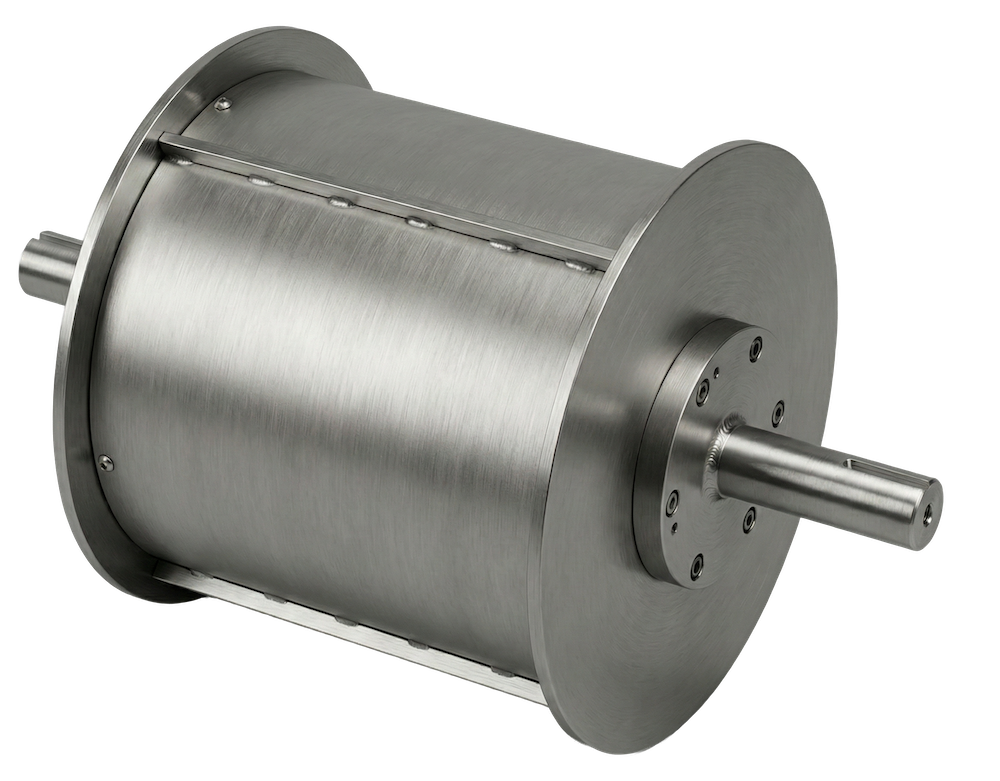
Power Only The Drive Motor
The permanent magnetic circuit needs no power to generate its field.
Protect Downstream Equipment
Remove ferrous tramp metal before it reaches shredders, grinders and screens.
Discharge Metal Continuously
Captured metal discharges automatically while material keeps moving.
No Coils Or Cooling Systems
No magnet coil, rectifier or magnet cooling system is required.
Start With The Material Flow
Continuous Removal At The Feed Or Transfer Point
Permanent drums continuously remove ferrous contamination from dry-material streams fed by gravity, belt, screw or vibratory feeder. A steady feed across the drum presents the material to the magnetic field.
Recycling And Plastics
Recover ferrous metal from dry recycling and plastics streams while keeping the non-magnetic material moving through the process.
Powder And Bulk Solids
Remove ferrous tramp metal from dry bulk solids to improve material cleanliness and help protect downstream processing equipment.
Food Processing
Remove ferrous contamination from dry food materials. Product-contact construction is matched to the material and cleaning requirements.
A drum receives material directly onto its rotating shell. If you need to lift tramp iron from an existing conveyor, compare overband magnets. For large or angular ferrous metal in heavy-duty recycling, explore Electro Drum Magnets. For other metal types, discuss additional separation or metal detection.
Equipment In Application
Permanent Drum Magnets In Application
See feed arrangements, housed drums and exposed assemblies. Select any photo for a larger, uncropped view.
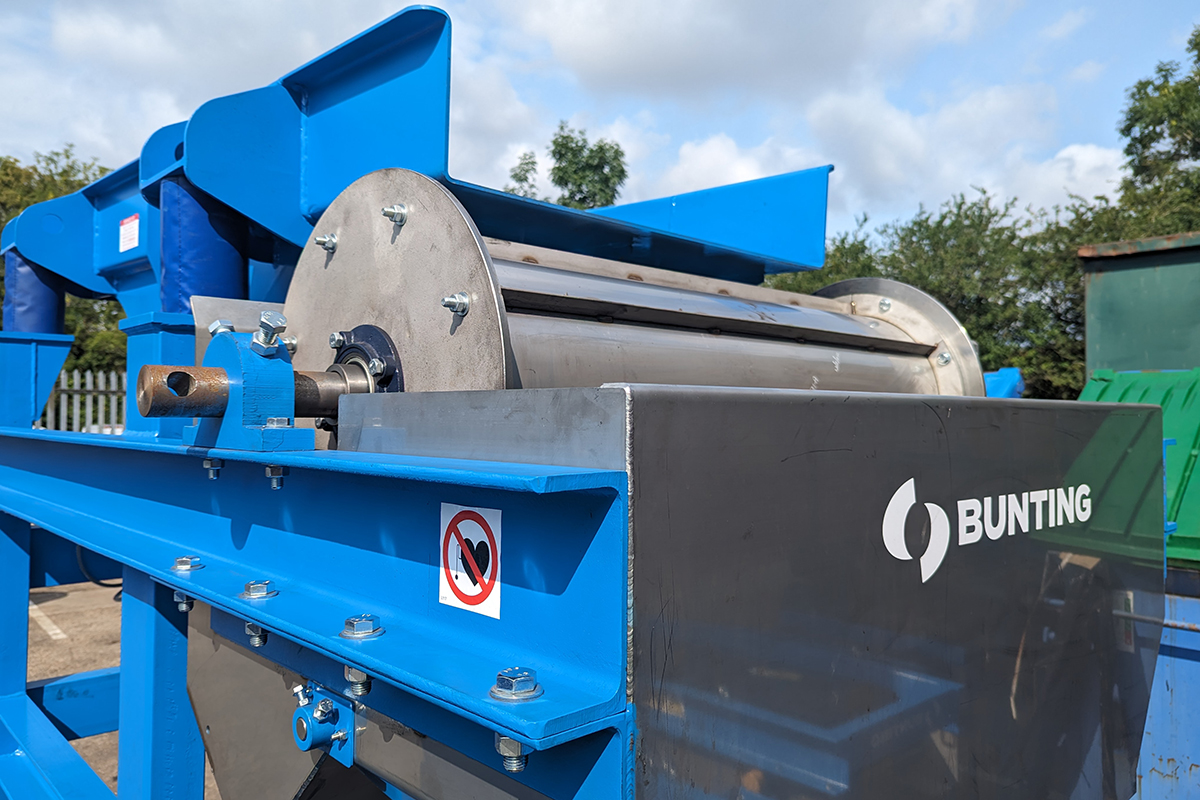
Drum With Vibratory Feeder
A vibratory feeder delivers material to the exposed drum.
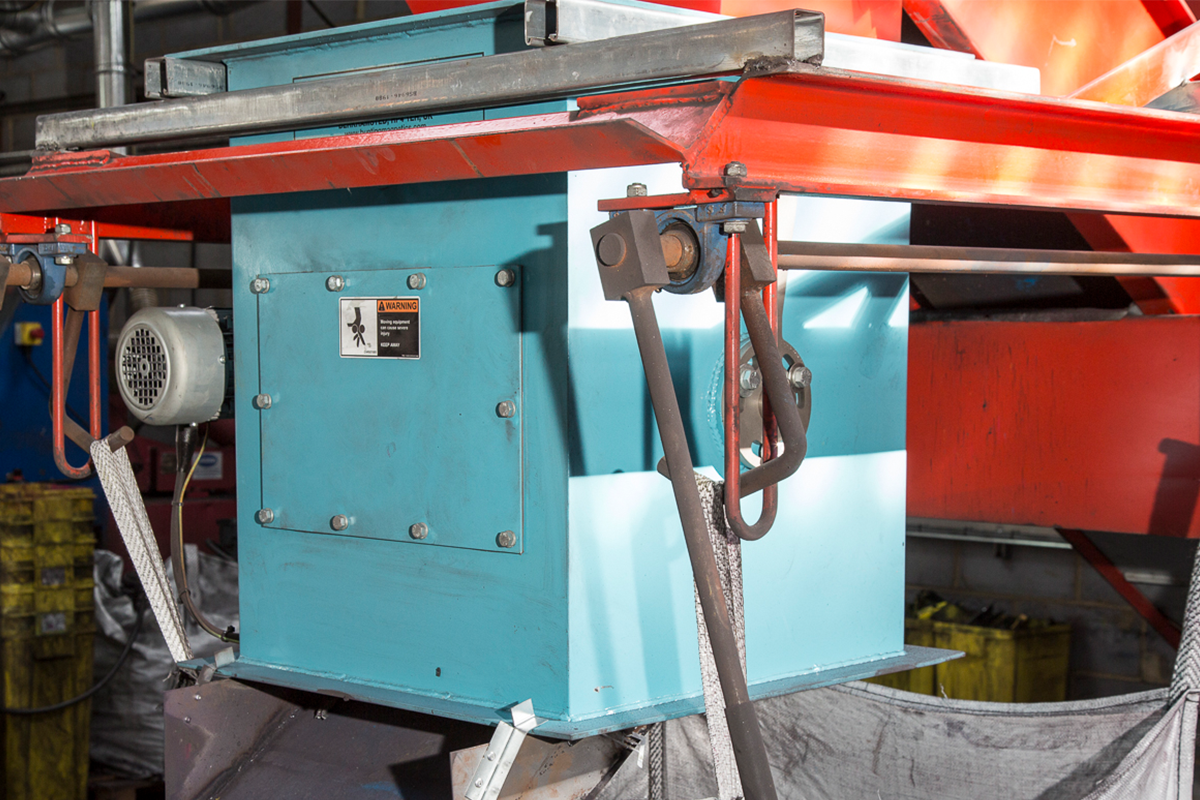
Housed Drum In A Processing Line
A housed drum installed beneath the material feed.
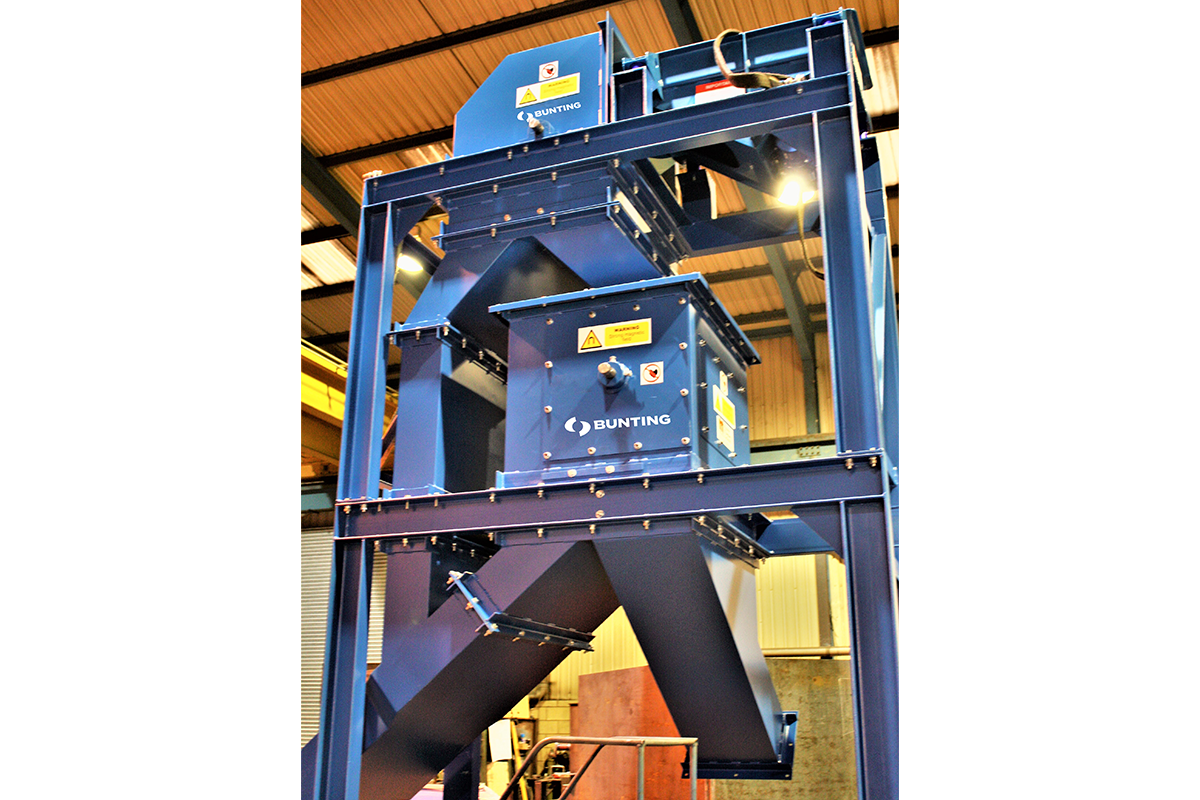
Drum Separation Tower
Drum equipment arranged within a multi-level support structure.
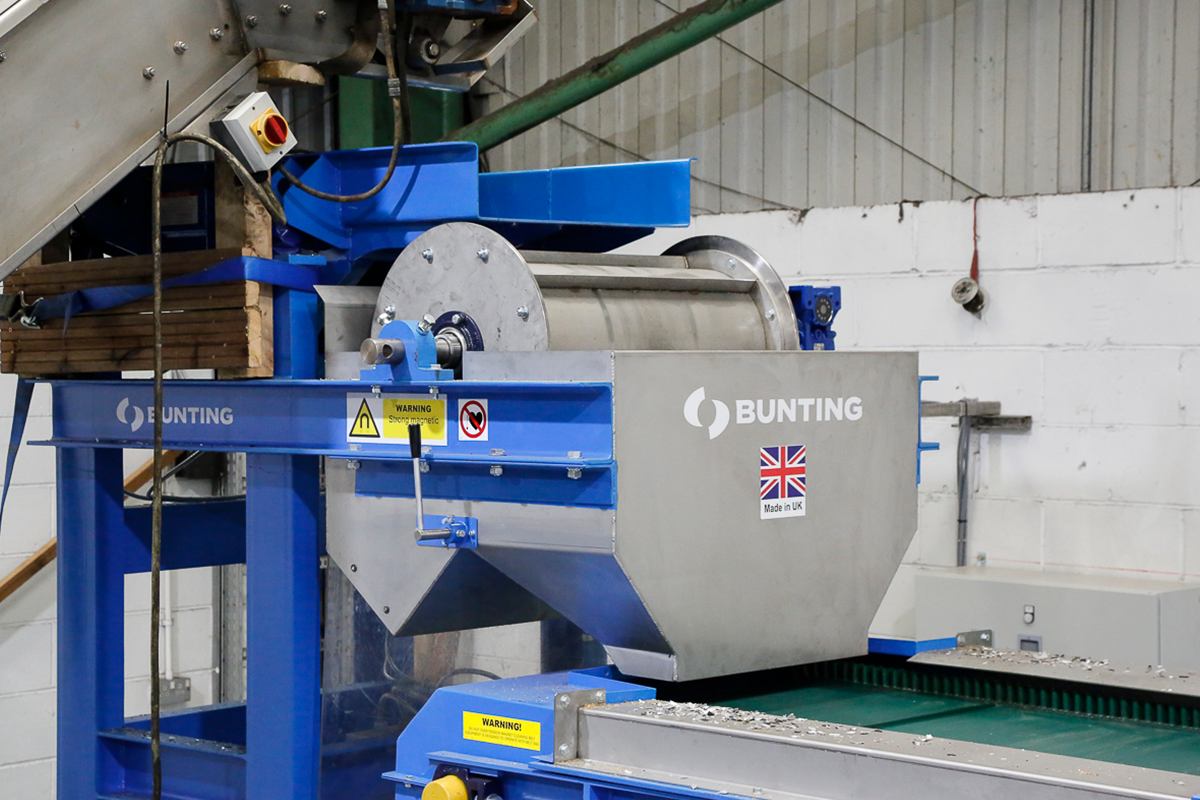
Drum Above A Conveyor
A permanent drum assembly installed above a takeaway conveyor.
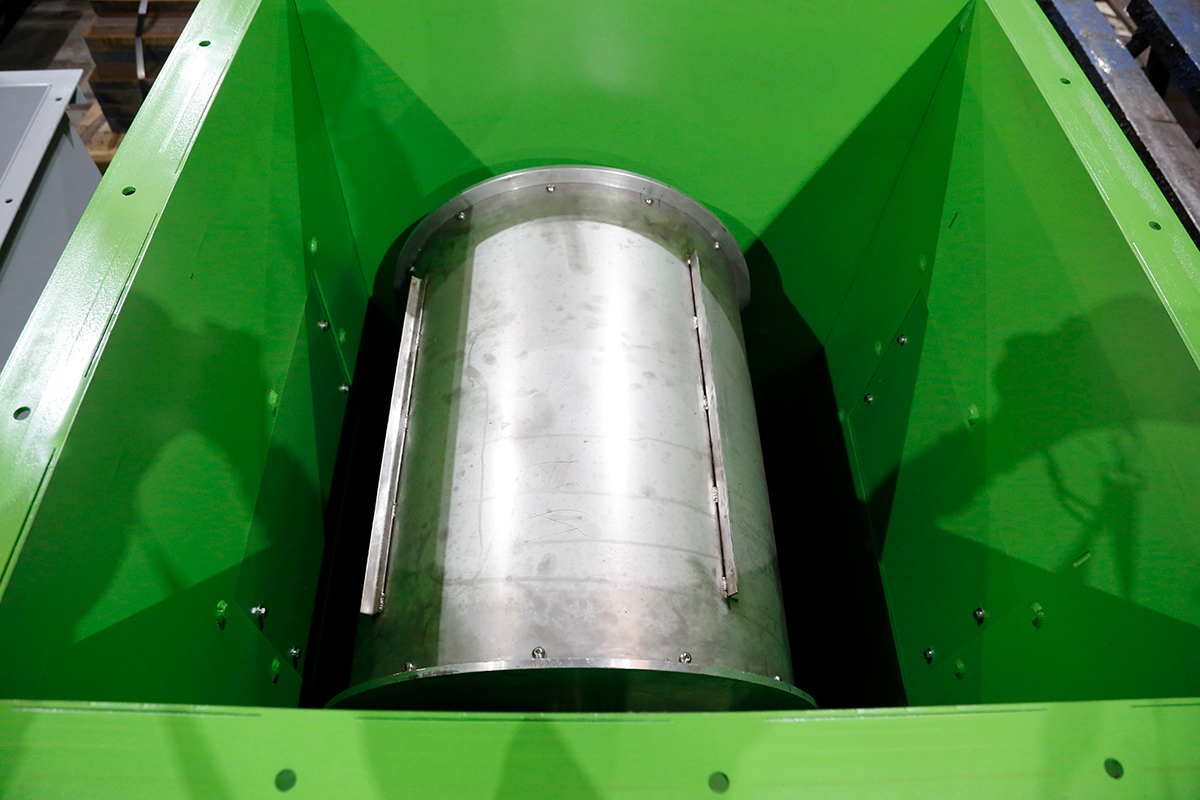
Drum Within A Green Housing
The drum surface is visible inside the surrounding housing.
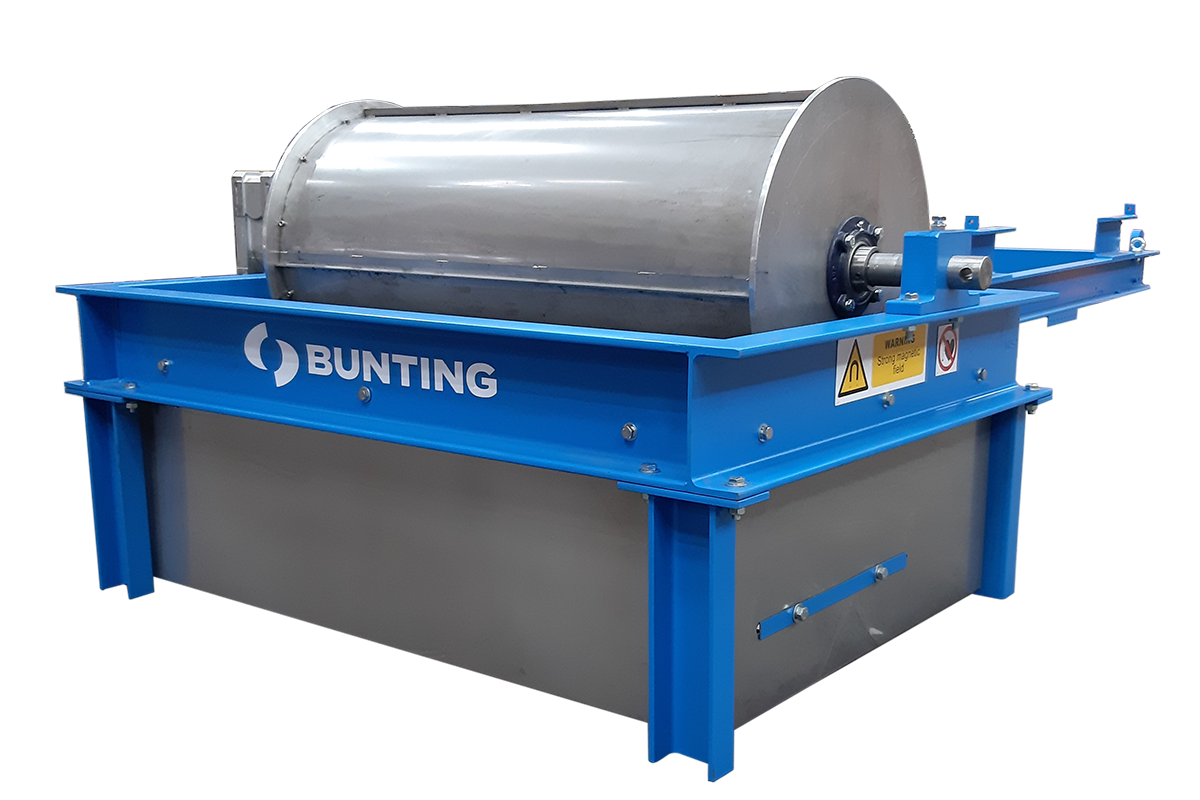
Open Drum Assembly
An exposed drum on a support frame shows the separator arrangement.
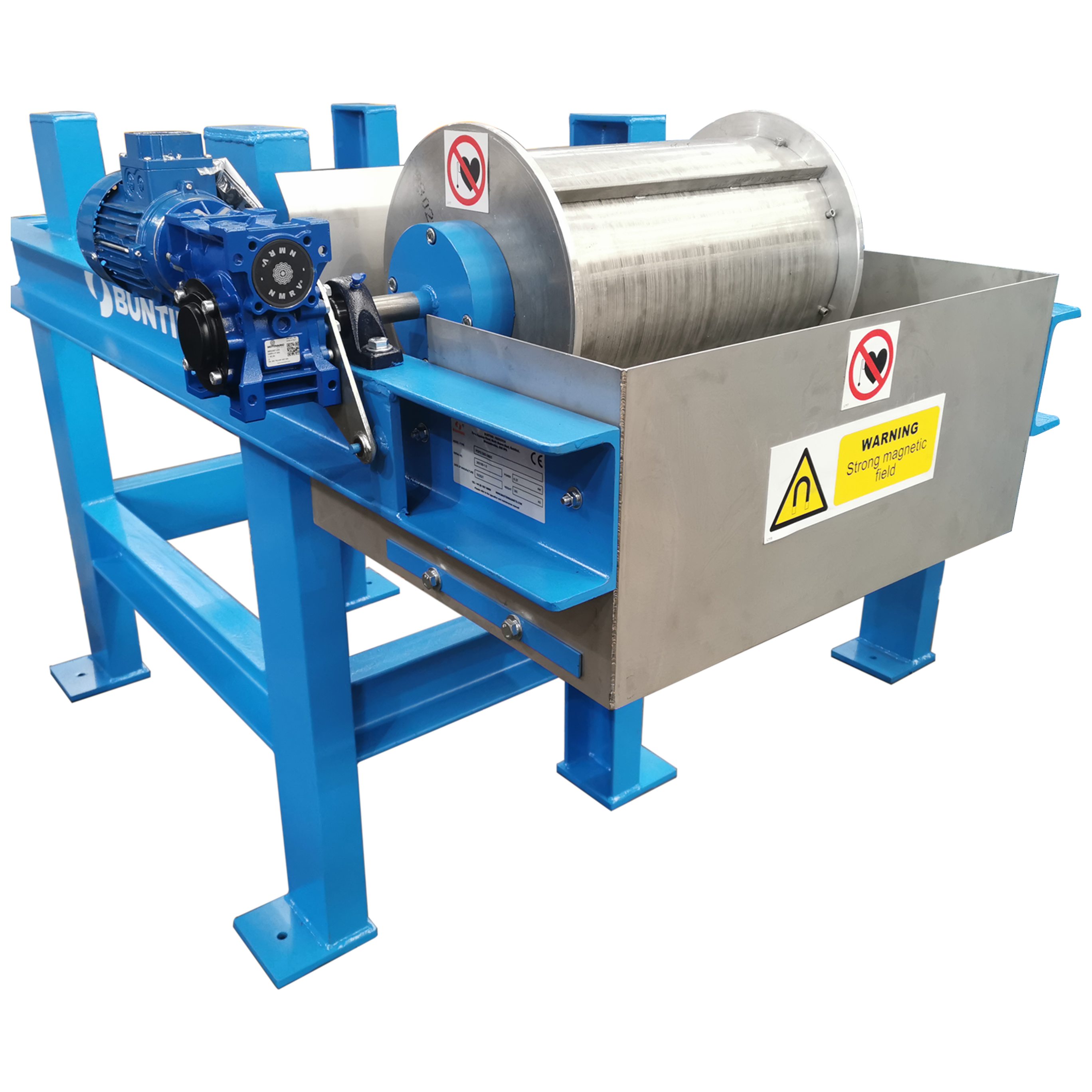
Ceramic Drum Assembly
The drum and geared drive are visible on the support frame.
Automatic Metal Discharge
How A Permanent Drum Magnet Works
- Material Enters The Drum
Dry material passes over a rotating non-magnetic shell. The permanent magnetic element remains stationary inside.
- The Magnet Holds Ferrous Metal
Magnetically responsive particles remain against the shell while the non-magnetic material follows its discharge path.
- The Drum Discharges Captured Metal
The rotating shell carries captured metal beyond the magnetic field to a separate discharge. The process continues as new material arrives.
Permanent Magnet. Powered Drum.
The ceramic or rare earth magnetic circuit needs no electrical power to generate its field. A motor drives the rotating shell.
No electromagnetic coil, rectifier or magnet cooling system is required.
Discuss Your Feed And Discharge LayoutConfigure The Separation Duty
Drum Options And Technical Details
Select the magnetic circuit and mechanical arrangement around the target metal, material behavior and installation space.
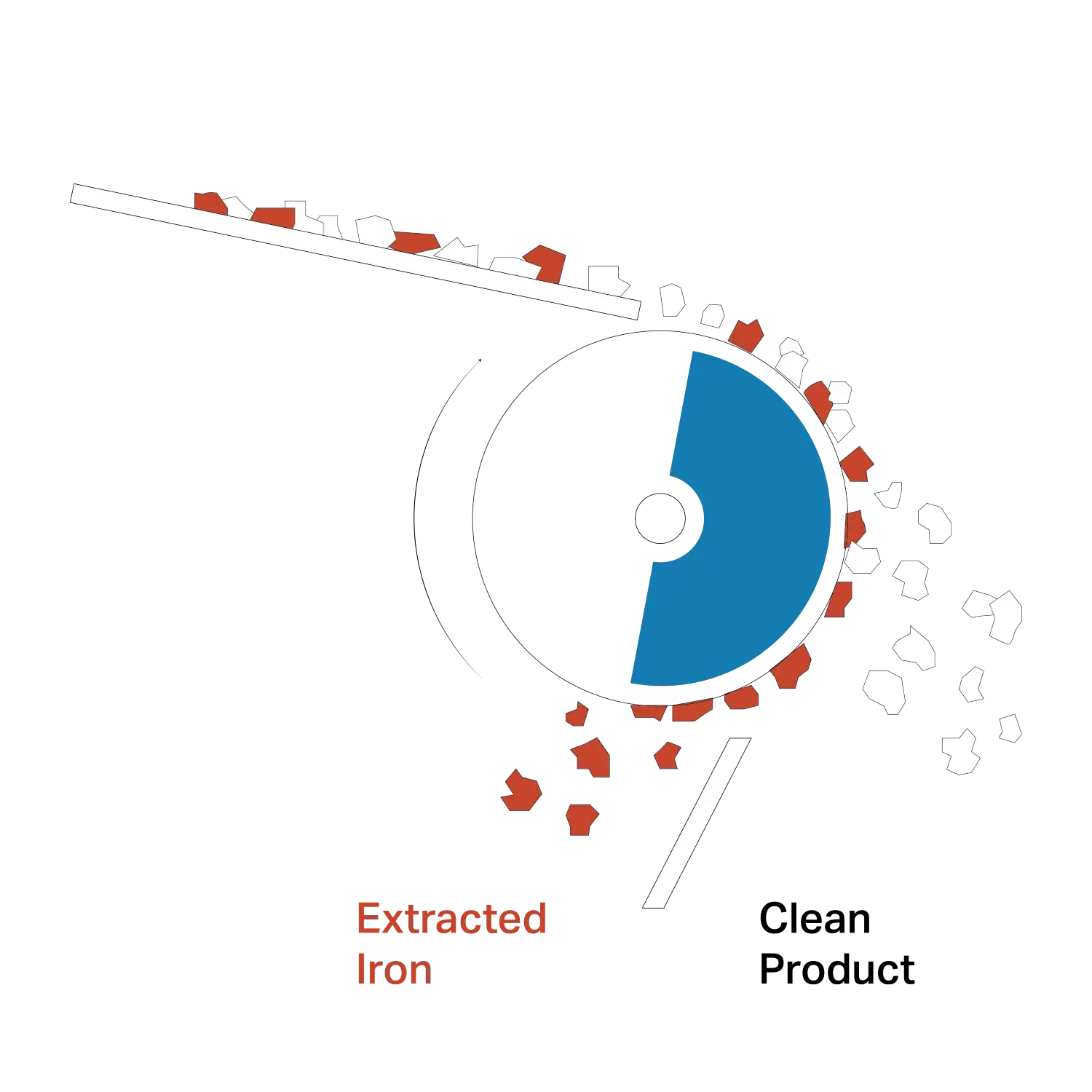
Radial Pole Design
Poles run in the direction of drum rotation and hold ferrous metal until it leaves the magnetic field.
Choose it when maximum ferrous removal or recovery is the goal.
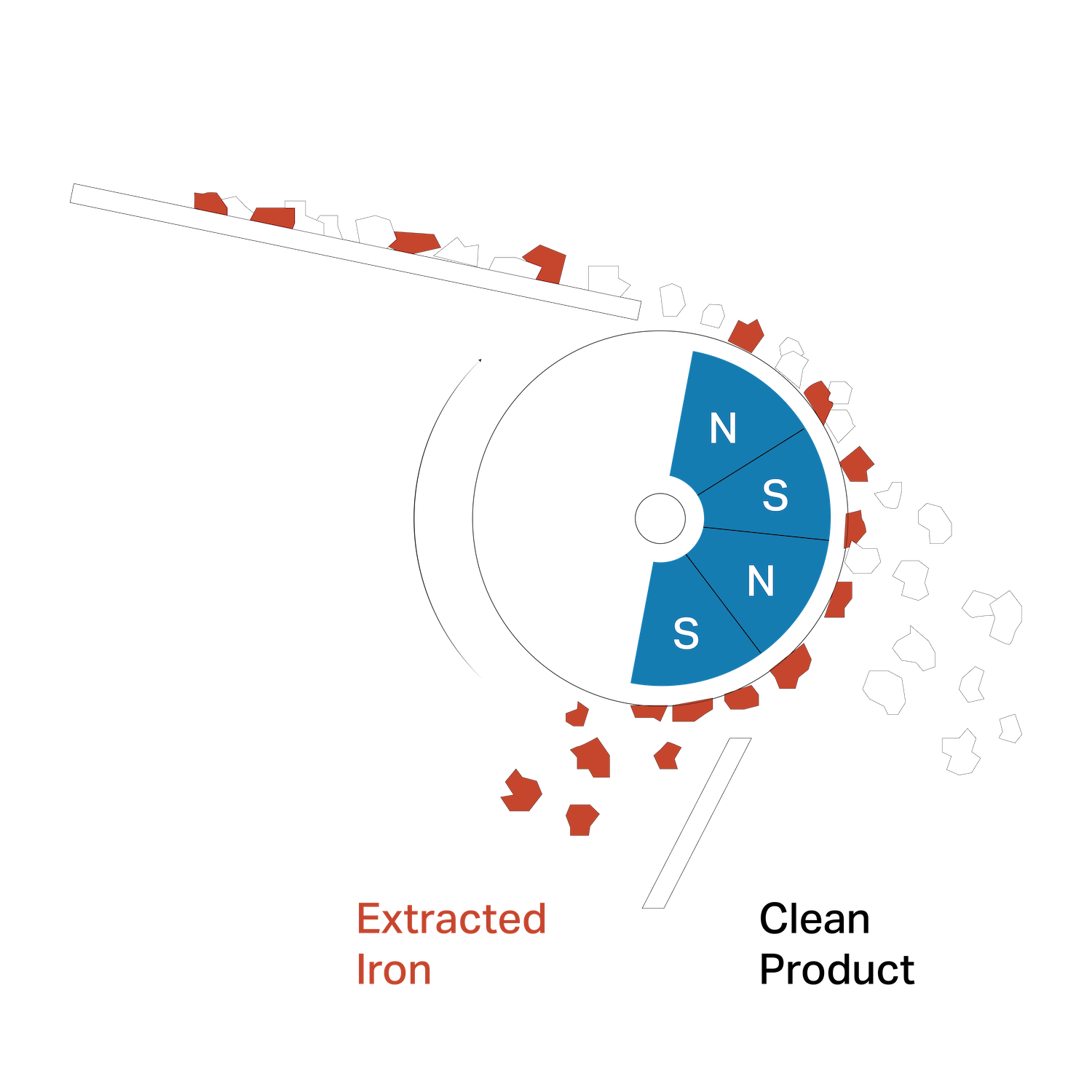
Alternating (Axial) Pole Design
Poles run across the drum width, so captured metal tumbles between them and releases trapped non-magnetic material.
Choose it when the purity of the recovered metal matters most.
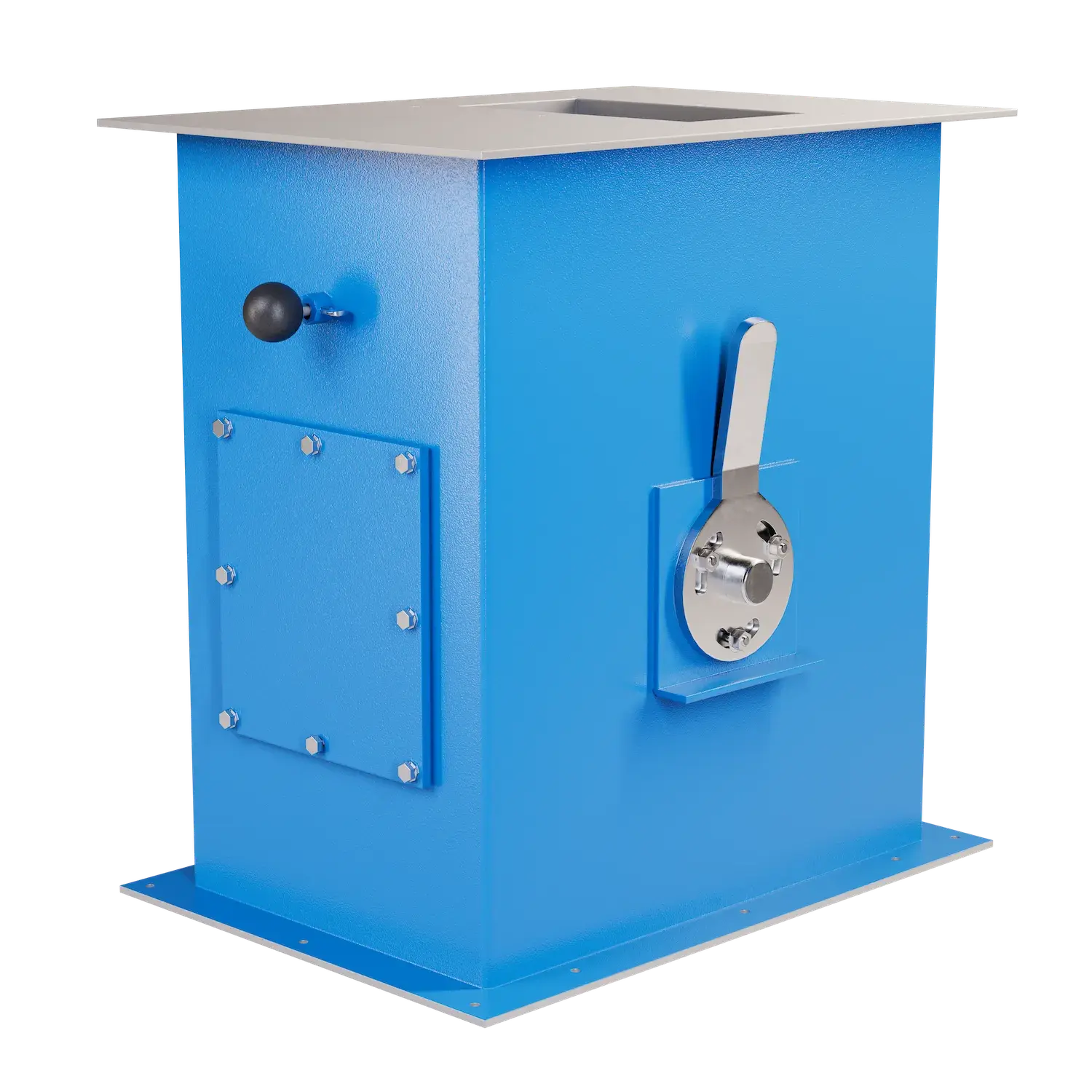
With Or Without A Housing
Open and housed arrangements fit different feed and discharge layouts. Adjustable splitters separate the product and captured metal discharge paths.
Construction And Operating Details
- Magnet material
- Ceramic, neodymium or Neodymium-HD
- Material
- Dry bulk solids
- Feed methods
- Gravity, belt, screw or vibratory feed
- Shell
- Non-magnetic stainless steel
- Magnetic arc
- Adjustable from 120 to 190 degrees
- Housing
- Available with or without a housing
- Drive
- Motor-driven shell; optional VFD
Magnetic arc and construction are configured for the application. Standard catalog dimensions and capacities are shown separately below.
Drive, Construction And Integration Options
- Motor-driven stainless steel shell for continuous self-cleaning.
- Standard motor with optional variable frequency drive (VFD).
- Multiple drum diameters and widths for new or retrofit installations.
- Optional housings and adjustable splitters.
- Wear-resistant components selected for the application.
Allow access to the drive and drum, and provide separate collection paths for product and captured metal.
Information For Drum Selection
- Material type, particle size, bulk density and moisture.
- Normal and maximum feed rate, material depth and feed width.
- Metal type, size and approximate contamination level.
- Purity or ferrous recovery goal and acceptable product carryover.
- Available space, feed method and discharge layout.
- Temperature, abrasion, cleaning and environmental requirements.
A photo or layout drawing can help. You do not need a complete specification to start.
Standard Catalog Range
Standard DS And DSH Drum Separators
DS models are supplied without housings. DSH models include housings. The catalog lists 12, 18 and 24-inch drum diameters, with drum lengths from 12 to 54 inches in the combinations below.
Magnetic load options include ceramic, neodymium and Neodymium-HD.
View Standard Models And Maximum Capacities
Dimensions are in inches. Maximum capacities are in cubic feet per hour (ft³/h). Flow rates depend on bulk density and the material. Contact Bunting for application-specific flow rates. Specifications are subject to change.
| Without Housing | With Housing | Diameter (in.) | Length (in.) | Max. Capacity (ft³/h) | Speed (rpm) | Motor (HP) |
|---|---|---|---|---|---|---|
| DS 1212 | DSH 1212 | 12 | 12 | 1,000 | 45 | 1/3 |
| DS 1218 | DSH 1218 | 12 | 18 | 1,500 | 45 | 1/3 |
| DS 1224 | DSH 1224 | 12 | 24 | 2,000 | 45 | 1/3 |
| DS 1230 | DSH 1230 | 12 | 30 | 2,500 | 45 | 1/2 |
| DS 1236 | DSH 1236 | 12 | 36 | 3,000 | 45 | 1/2 |
| DS 1812 | DSH 1812 | 18 | 12 | 1,600 | 35 | 1/2 |
| DS 1818 | DSH 1818 | 18 | 18 | 2,400 | 35 | 1/2 |
| DS 1824 | DSH 1824 | 18 | 24 | 3,200 | 35 | 1/2 |
| DS 1830 | DSH 1830 | 18 | 30 | 4,000 | 35 | 3/4 |
| DS 1836 | DSH 1836 | 18 | 36 | 4,800 | 35 | 3/4 |
| DS 1842 | DSH 1842 | 18 | 42 | 5,600 | 35 | 3/4 |
| DS 1848 | DSH 1848 | 18 | 48 | 6,400 | 35 | 3/4 |
| DS 2418 | DSH 2418 | 24 | 18 | 3,300 | 30 | 3/4 |
| DS 2424 | DSH 2424 | 24 | 24 | 4,400 | 30 | 3/4 |
| DS 2430 | DSH 2430 | 24 | 30 | 5,500 | 30 | 1 |
| DS 2436 | DSH 2436 | 24 | 36 | 6,600 | 30 | 1 |
| DS 2442 | DSH 2442 | 24 | 42 | 7,700 | 30 | 1 |
| DS 2448 | DSH 2448 | 24 | 48 | 8,800 | 30 | 1 |
| DS 2454 | DSH 2454 | 24 | 54 | 10,000 | 30 | 1 |
Engineered To Order
Standard Drums Or Engineered To Your Process
When your application needs a larger drum, a different magnetic arc, a special housing or a layout no catalog model fits, Bunting engineers one around your material, feed rate and available space.
- Engineered Drum Diameter
- Up to 1,500 millimeters (59.1 inches)
- Engineered Drum Width
- Up to 2,400 millimeters (94.5 inches)
The selected dimensions, magnetic circuit and layout are specified for the individual application.
Talk With A Bunting Application EngineerLet Bunting Confirm The Fit
Get A Permanent Drum Recommendation
Tell us what you process and the ferrous metal you need to remove. Include your feed rate and layout if available. We’ll help select the magnetic circuit, drum size and feed arrangement.
No model number or complete specification required.
Americas 1-800-835-2526
Outside The Americas +44 (0) 1527 65858
Tell Us About Your Application
Permanent Drum Magnet Questions
Does A Permanent Drum Magnet Need Electricity?
The permanent magnetic circuit does not need electrical power. The drum shell uses a motor to rotate and discharge captured ferrous metal continuously.
Which Feed Methods Can Be Used?
Gravity, belt, screw and vibratory feed are supported. Bunting reviews the feed distribution, burden depth and flow behavior with the selected drum.
How Is A Drum Different From An Overband Magnet?
Material is fed directly onto a drum’s rotating shell. An overband is suspended above a conveyor and lifts ferrous metal from the conveyed material. The layout and separation duty determine which arrangement fits.
Can A Permanent Drum Remove Every Type Of Metal?
The drum targets magnetically responsive ferrous material. Do not assume it will separate aluminum, copper or all stainless steel. Discuss the actual contamination with Bunting.
What Determines The Required Drum Size?
Feed rate alone is not enough. Particle size, bulk density, material depth, feed width, metal characteristics and the separation goal all inform selection.