

Updated October 2026. Revised for Bunting's current metal separation range.
How a drum magnet, an eddy current separator and an electrostatic separator recover aluminium from crushed dross, from laboratory tests to a production line.
Short answer: Aluminium is recovered from crushed dross in three stages: a rare earth drum magnet removes magnetic particles, an eccentric eddy current separator recovers aluminium pearls, and an electrostatic separator recovers the finer aluminium the eddy current separator cannot. For one Middle East dross processor, Bunting tested the dross first, then designed and built a production line handling about 3 tonnes per hour.
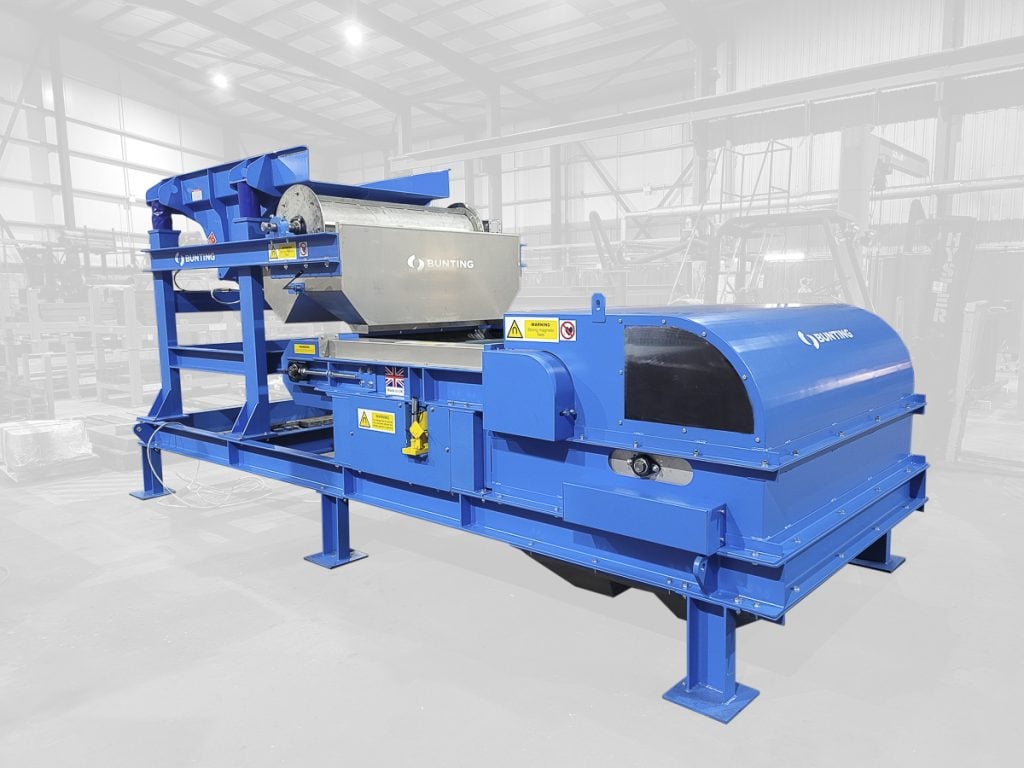
An aluminium dross processing plant in the Middle East purchased an eddy current separator, drum magnet and electrostatic separator to recover the valuable metal. The separation equipment was designed and built by Bunting at its Redditch manufacturing facility in the United Kingdom.
What is aluminium dross, and why recover metal from it?
Aluminium dross is a byproduct of the aluminium smelting process. After crushing, mechanical separation enables the recovery of residual aluminium from the aluminium oxide.
How were the dross samples tested?
The first stage of the project involved Bunting conducting controlled material separation tests on three samples at its Customer Experience Centre in the UK. Each sample had a different particle size range. The tests, run on a range of laboratory-scale separators, confirmed how much aluminium could be recovered using three different types of equipment. Watch aluminium being recovered from crushed dross on the eddy current separator.
Magnetic particles
Rare earth drum magnet
The first stage removed magnetic particles with a high-intensity rare earth drum magnet. Magnetics accounted for approximately 1%. Removing them benefits the later stages.
The drum has a stationary permanent magnetic element mounted inside a rotating non-metallic shell. A vibratory feeder delivers an even, controlled flow of material onto the shell and into the magnetic field. Magnetic particles are attracted to the surface and deposited in a collection area under the drum. Non-magnetics follow a normal trajectory and are recovered separately.
Aluminium pearls
Eccentric eddy current separator
The second stage separated small pearls of aluminium from the dross. An eccentric eddy current separator recovered 14% aluminium from the dross.
The eccentric design has a high-strength magnetic rotor mounted in the top corner of a non-metallic shell. The rotor, with a series of alternating magnetic poles, spins at high speed. When aluminium enters the changing magnetic field, a current is induced in the particle. This creates a magnetic field opposing the rotating field, repelling the particle and separating it from the unaffected non-metallic material.
Fine aluminium
Electrostatic separator
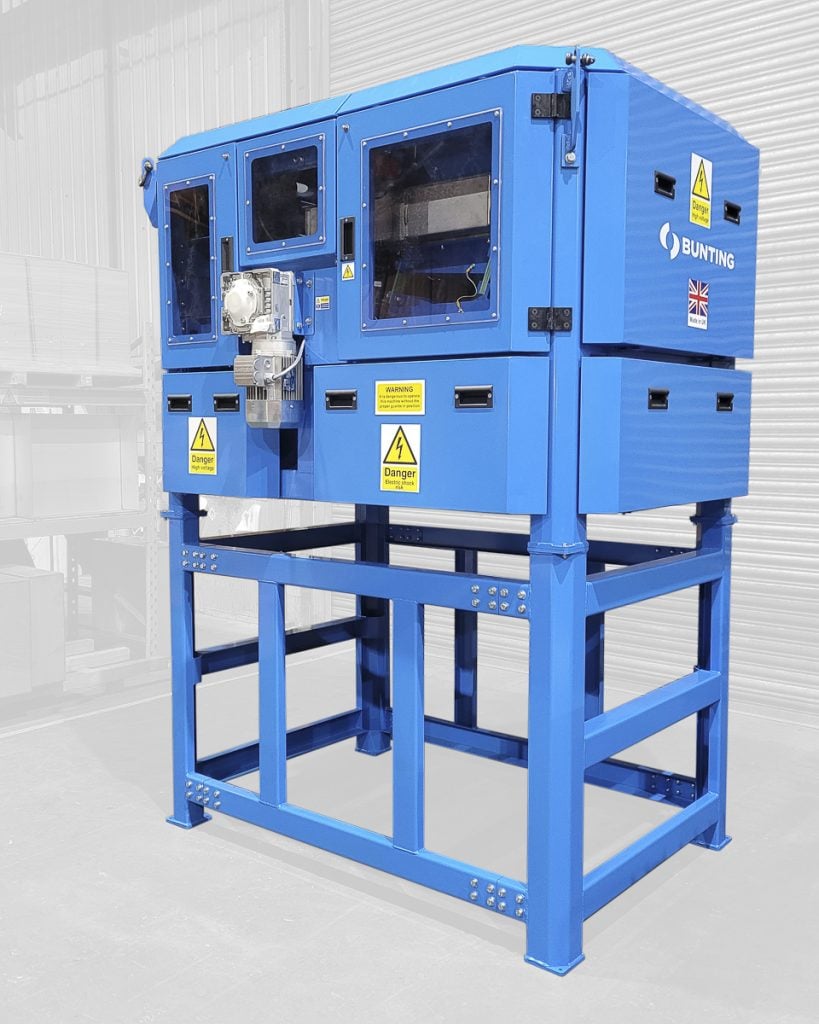
For the finer fractions, the remaining material passed through an electrostatic separator. Separation works by inducing an electrostatic charge in a conductive, dry, liberated particle such as aluminium. The electrostatic separator recovered a further 6% of aluminium.
The tests concluded that approximately 15% of aluminium could be recovered from the dross using a combination of the three separators.
What does the production-scale line look like?
The production equipment was sized to handle approximately 3 tonnes per hour of 1.5 to 20 mm aluminium dross. The particle size range of the feed is controlled to maximise separation performance.
| Stage | Equipment | Size |
|---|---|---|
| Feed | Vibratory feeder | Controlled flow onto the drum magnet |
| Magnetics removal | Rare earth drum magnet | 1250 mm wide, 350 mm diameter |
| Aluminium recovery | Eddy current separator with adjustable splitter | 1250 mm wide |
| Fine aluminium recovery | Electrostatic separator with control and adjustable splitter | 1000 mm wide |
The vibratory feeder, drum magnet and eddy current separator are mounted on one frame and run from a single, separately located control cabinet. The remaining material is then fed, in designated finer size fractions, through the electrostatic separator, which recovers fine aluminium an eddy current separator cannot.
Why does combining separation technologies matter?
No single separator recovered all the aluminium in this dross. The drum magnet cleaned the feed, the eddy current separator recovered the aluminium pearls, and the electrostatic separator recovered the fine aluminium below the eddy current separator's range. Testing the samples first confirmed what each stage could recover before the production line was specified.
Related reading: How Is Metal Recovered from WEEE and Cable Waste? and Which Magnetic Separators Do Recycling Plants Use to Maximize Metal Recovery?
Frequently asked questions
How is aluminium recovered from dross?
After crushing, a rare earth drum magnet removes magnetic particles, an eccentric eddy current separator recovers aluminium pearls, and an electrostatic separator recovers finer aluminium that the eddy current separator cannot.
Why remove magnetic particles first?
Removing magnetics with a drum magnet benefits the later separation stages. In this project, magnetics accounted for approximately 1% of the dross.
What does an electrostatic separator add?
It recovers fine aluminium below the range an eddy current separator can handle, by inducing an electrostatic charge in conductive, dry, liberated particles.
Can I test my dross before buying equipment?
Yes. Bunting runs controlled separation tests on customer samples at its Customer Experience Centre in the UK to confirm what each separator can recover.