
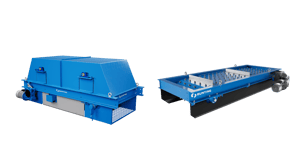
Electro vs Permanent Overband Magnets: Choosing the Right Solution for Aggregate Conveyors
In aggregate-handling and quarry operations, protecting conveyor systems from tramp metal is essential. A stray bolt, excavator tooth fragment, or steel plate can cause expensive equipment damage, unplanned downtime, and contamination issues.
That protection starts with selecting the correct overband magnet for your conveyor system. However, not all overband magnets operate the same way.
Bunting supplies both electro overband magnets and permanent overband magnets for aggregate conveyors, quarry operations, recycling systems, and bulk material handling applications.
This guide explains the differences between electro and permanent overband magnets, compares performance characteristics, and helps aggregate operators determine which technology is best suited to their conveyor system.
Contents
- Technology Overview
- Electro Overband Magnets
- Permanent Overband Magnets
- Key Comparison Points
- Application Guide for Aggregate Conveyors
- When to Choose Permanent Overbands
- When to Choose Electro Overbands
- Decision Factors and Checklist
- Frequently Asked Questions
Technology Overview
Overband magnets are installed above conveyors to automatically remove tramp ferrous metal contamination from conveyed material.
Both electro and permanent overband magnets perform the same basic function, but they generate magnetic fields differently and are optimized for different operating conditions.
Electro Overband Magnets
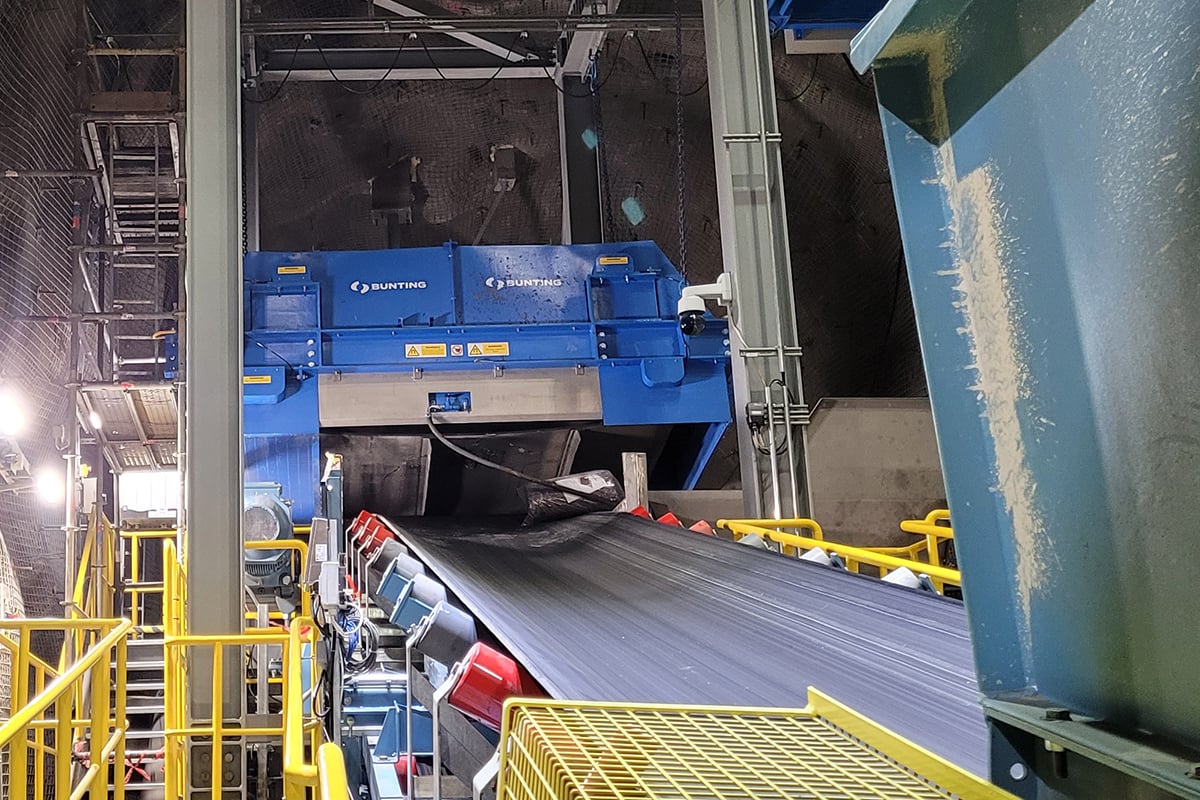
An oil cooled electro overband magnet installed in a gold mine in Finland
Electro overband magnets use an energized electromagnetic coil to generate a magnetic field capable of attracting and removing ferrous contamination from conveyed material.
Bunting’s electro range includes:
- ElectroMax air-cooled overband magnets
- ACW air-cooled electro overbands
- OCW oil-cooled electro overbands
Electro overbands are particularly effective where:
- Burden depth is high
- Conveyors are wide
- Suspension heights are large
- Tramp metal risk is severe
- Deep magnetic field penetration is required
Because the magnetic field is electrically generated, electro overbands can be switched on or off and optimized for specific operating conditions.
Permanent Overband Magnets
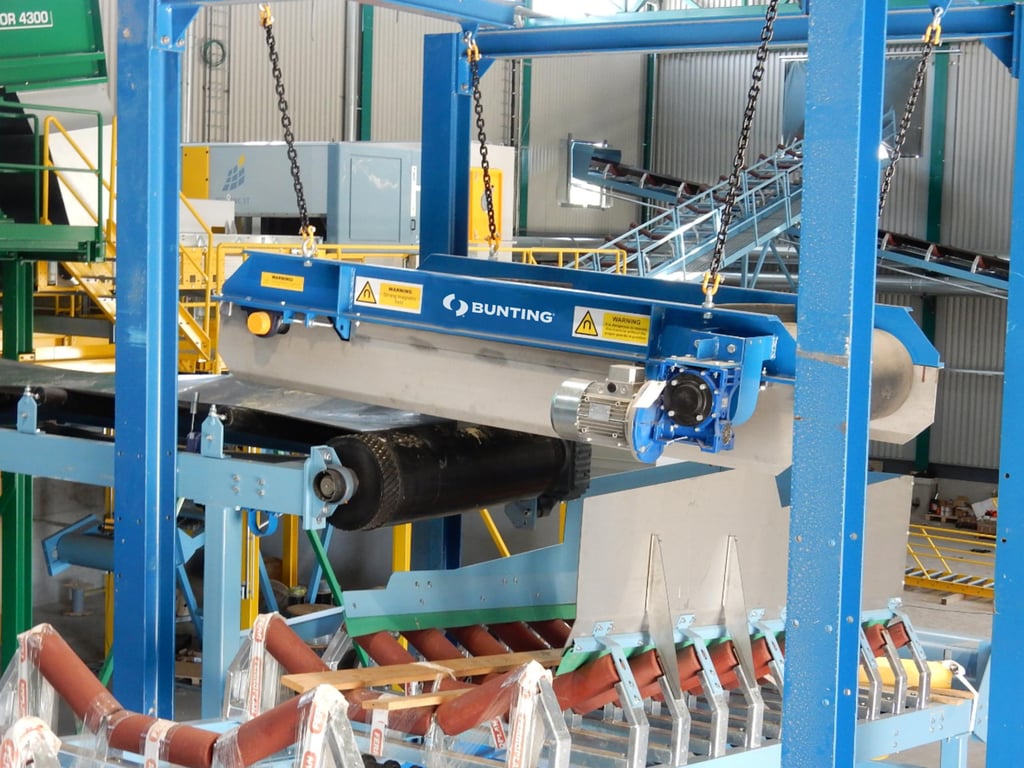
A permanent overband magnet installed inline to a conveyor
Permanent overband magnets use permanent magnetic blocks, typically ferrite or rare earth magnets, to generate a constant magnetic field without requiring electrical power.
Because there is no energized coil, permanent overband magnets:
- Require less maintenance
- Do not need magnetic power
- Do not require cooling systems
- Operate continuously with minimal intervention
Permanent overbands are commonly used where:
- Power availability is limited
- Maintenance access is restricted
- Conveyor burden is moderate
- Simplicity and reliability are priorities
Key Comparison Points
| Feature | Electro Overband | Permanent Overband |
| Power Requirement | Requires electrical power and cooling in some applications | No power required for magnetic field |
| Magnetic Field Adjustability | Magnetic field can be controlled or switched off | Magnetic field remains fixed |
| Deep Burden Performance | Excellent for deep burden and high suspension height | Performance decreases as burden depth increases |
| Maintenance | Requires maintenance of coils and cooling systems | Minimal maintenance requirements |
| Operating Costs | Higher operating cost due to power usage | Lower operating cost |
| Typical Applications | Primary crushers, high-duty quarry conveyors | Mobile plant, moderate-duty conveyors |
Application Guide for Aggregate Conveyors
Choosing between electro and permanent overband magnets depends on several operational factors, including:
- Conveyor width
- Burden depth
- Suspension height
- Tramp metal size and frequency
- Power availability
- Maintenance capability
- Operating environment
Each overband technology performs best under different operating conditions.
When to Choose Permanent Overband Magnets
Permanent overband magnets are often the best solution when:
- Maintenance must be minimized
- Power availability is limited
- Conveyors are smaller or moderate duty
- Burden depth is moderate
- Mobile equipment requires simple installation
Common applications include:
- Mobile crushers
- Mobile screens
- Stockpile conveyors
- Secondary conveyors
- Smaller aggregate transfer conveyors
Permanent overbands are valued for simplicity, low maintenance, and continuous operation.
When to Choose Electro Overband Magnets
Electro overband magnets are typically preferred when:
- Conveyor burden is deep
- Belt widths are large
- Suspension heights are high
- Tramp metal risk is severe
- Maximum magnetic field penetration is required
Electro overbands are commonly used on:
- Primary quarry feed conveyors
- Primary crusher feed belts
- Large aggregate conveyors
- Mining conveyors
- High-capacity bulk handling systems
Where crusher damage risk is extremely high, electro overbands often provide the strongest protection.
Decision Factors and Checklist
Key Factors to Evaluate
- Belt width
- Burden depth
- Suspension height
- Tramp metal size and frequency
- Power availability
- Maintenance access
- Support structure capacity
- Environmental conditions
- Total lifecycle cost
Quick Conveyor Checklist
- What is the conveyor width?
- What is the maximum burden depth?
- What suspension height is available?
- How severe is the tramp metal risk?
- Is reliable electrical power available?
- How accessible is the installation area?
- Is the conveyor mobile or fixed?
- What are the downtime costs if damage occurs?
Making the Final Decision
As a general guideline:
- If burden depth, suspension height, conveyor width, and tramp metal risk are all high, electro overbands are usually the best option.
- If simplicity, low maintenance, and reduced operating cost are priorities, permanent overbands are often preferred.
Ultimately, the correct overband magnet depends on the operating conditions and risk profile of the conveyor system.
Frequently Asked Questions
Final Thoughts
Selecting the correct overband magnet is an important decision for aggregate and quarry operations.
Permanent overband magnets provide simple, low-maintenance operation for moderate-duty applications, while electro overband magnets deliver the high-performance magnetic protection required for demanding conveyor systems.
Bunting’s engineering team can help evaluate your conveyor system, burden depth, suspension height, and tramp metal risk to recommend the most effective overband magnet solution.
If you need help selecting the correct electro or permanent overband magnet for your application, contact Bunting’s magnetic separation specialists.