

Pumped Liquids, Pastes And Slurries
Liquid Magnetic Separator
Capture ferrous metal in pumped liquids, pastes and slurries.
Neodymium magnetic rods capture ferrous particles as product passes through a 316 stainless steel housing. Available for 2, 3 and 4-inch lines, the separator connects within a pumped product line. Also known as a magnetic liquid trap.
- 316 Stainless SteelHousing construction
- 2, 3 And 4-Inch LinesNominal line sizes
- Neodymium Magnets10,000 gauss
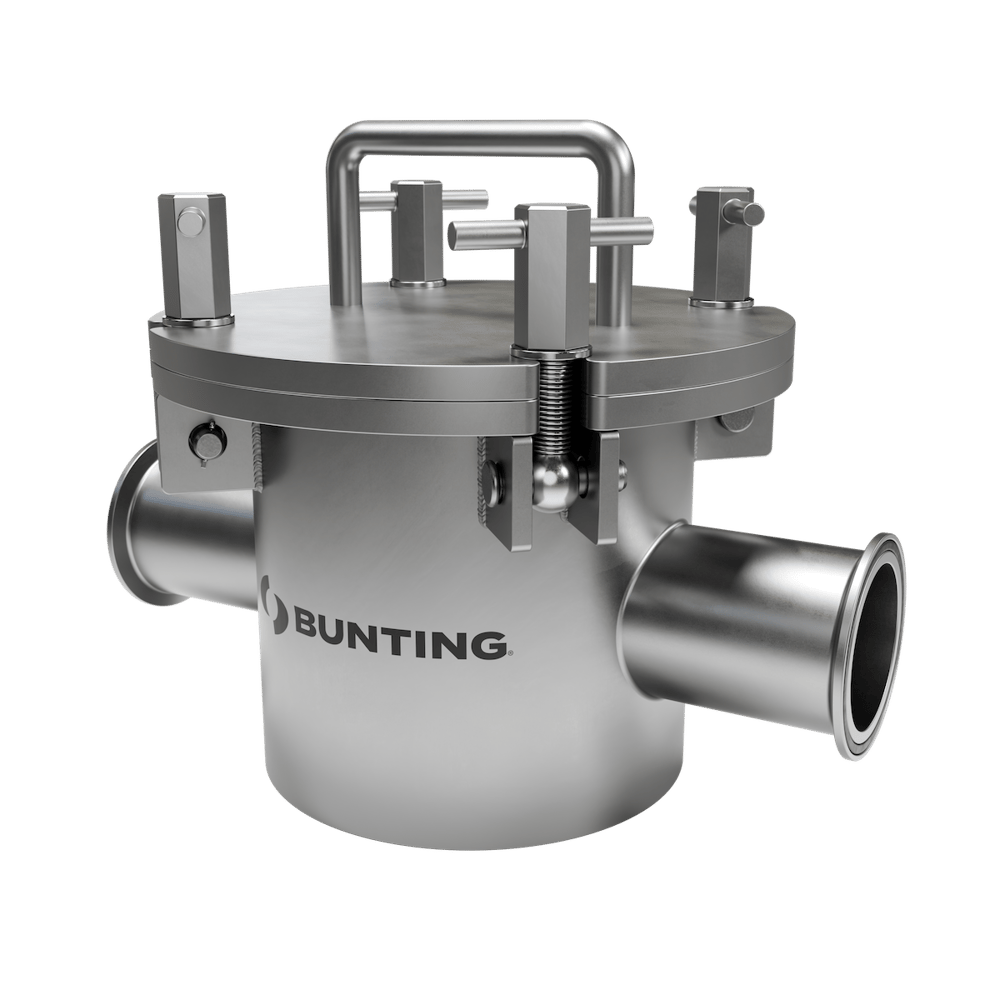
Match The Equipment To Your Process
Designed For Liquid Product Lines
For pumped liquids, pastes and slurries in food, pharmaceutical and ceramic processing, including dairy products, juices, oils and soups.
Liquids And Pastes
Provide viscosity at processing temperature and flow rate.
Slurries And Products With Solids
Provide solids loading and the largest particle or product-piece size.
Product-Contact Requirements
Specify product chemistry, cleaning procedures and sanitary requirements.
Where Does It Connect?
Install within the pumped line at the selected ferrous-removal point. Share a line drawing showing the pump, other equipment, pressure and access space.
Capture, Retain, Clean
How The Separator Works
1. Product Enters
Pumped product passes through the separator housing.
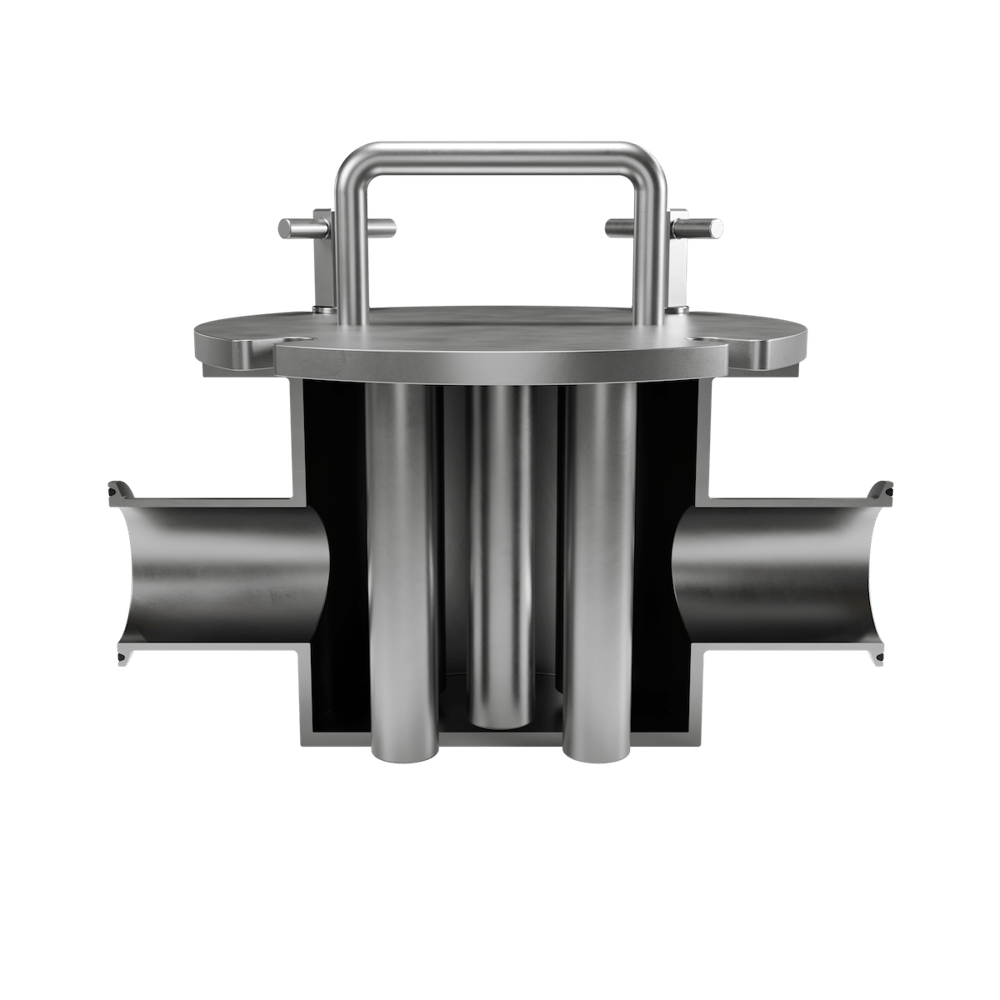
2. Magnets Capture
Magnetic rods attract and retain ferrous contamination.
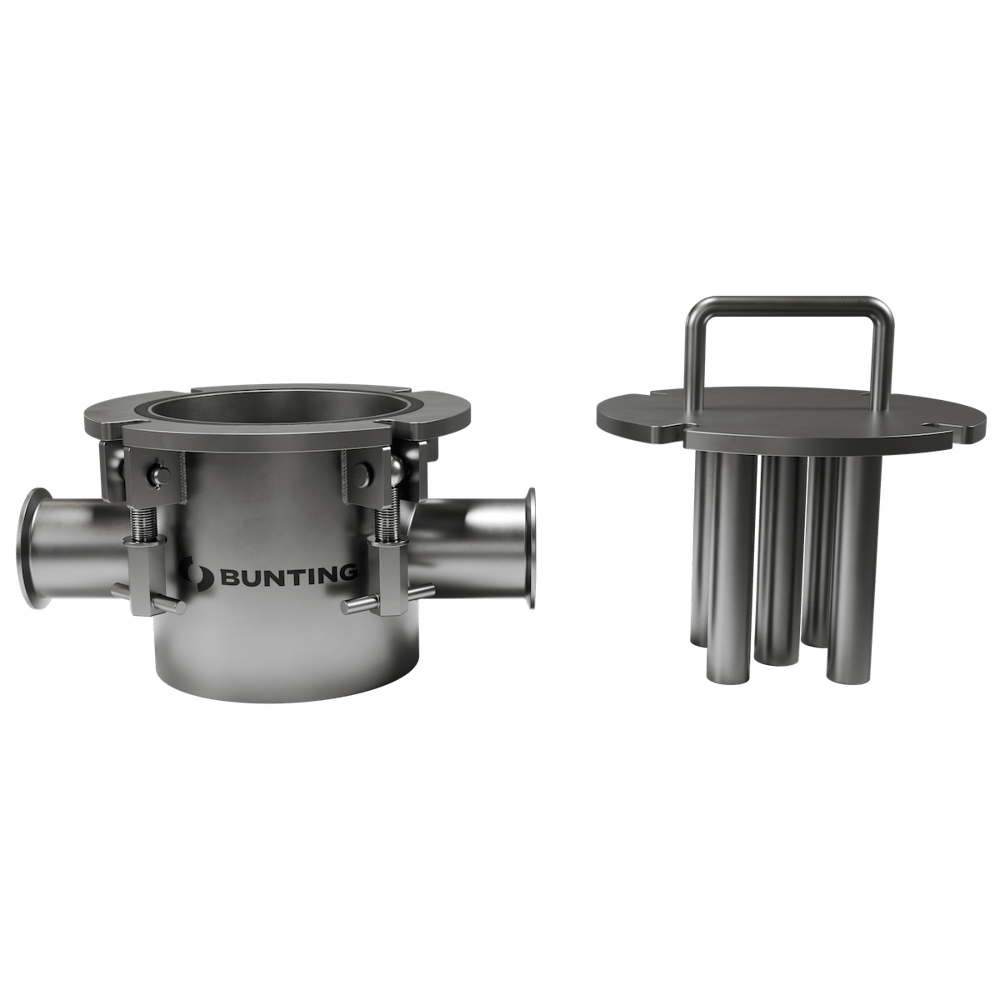
3. Remove For Cleaning
The removable assembly gives access to captured contamination.
See The Equipment In Motion
Liquid Separator Animation
See how product flows through the separator and how the magnetic assembly is accessed for cleaning.
Explore The Product
Product Photo Gallery
Select a product image to explore the housing, magnetic rods and cleaning access.
View Five More Product Images
Configuration And Operating Conditions
Technical Specifications
Bunting matches the assembly and seals to your operating conditions and cleaning cycle, with configuration-specific limits stated in your quotation.
- Magnetic Elements
- Rare earth neodymium magnetic rods
- Magnetic Strength
- 10,000 gauss; 6 kg (13 lb) pull
- Materials Handled
- Liquids, pastes and slurries
- Construction
- 316 stainless steel
- Line Sizes
- 2, 3 and 4 inches, listed as 50, 80 and 100 mm
- Pressure Rating
- 145 psi (10 bar)
- Temperature Capability
- Up to 248°F (120°C)
- Connections
- DN, 150 lb and Tri-Clamp flange options
- Options
- Water jacket and self-cleaning arrangements
- Cleaning Access
- Quick-release lid and removable magnetic assembly
- Gaskets
- EPDM standard
Product-Contact Construction And Cleaning
The separator uses 316 stainless steel construction and EPDM gaskets as standard. Share your product-contact finish, weld, seal and drainability requirements, together with cleaning chemistry, temperature and cycle, so Bunting can match the seals and cleaning arrangement to your sanitation procedure. Include any clean-in-place (CIP) requirements in your inquiry.
Viscosity, Solids And Magnetic Strength
Provide viscosity at operating temperature, solids loading, largest particle or product-piece size, flow rate and target contaminant. Bunting can review flow and pressure drop for your line and discuss testing with your material.
Options And Cleaning Arrangements
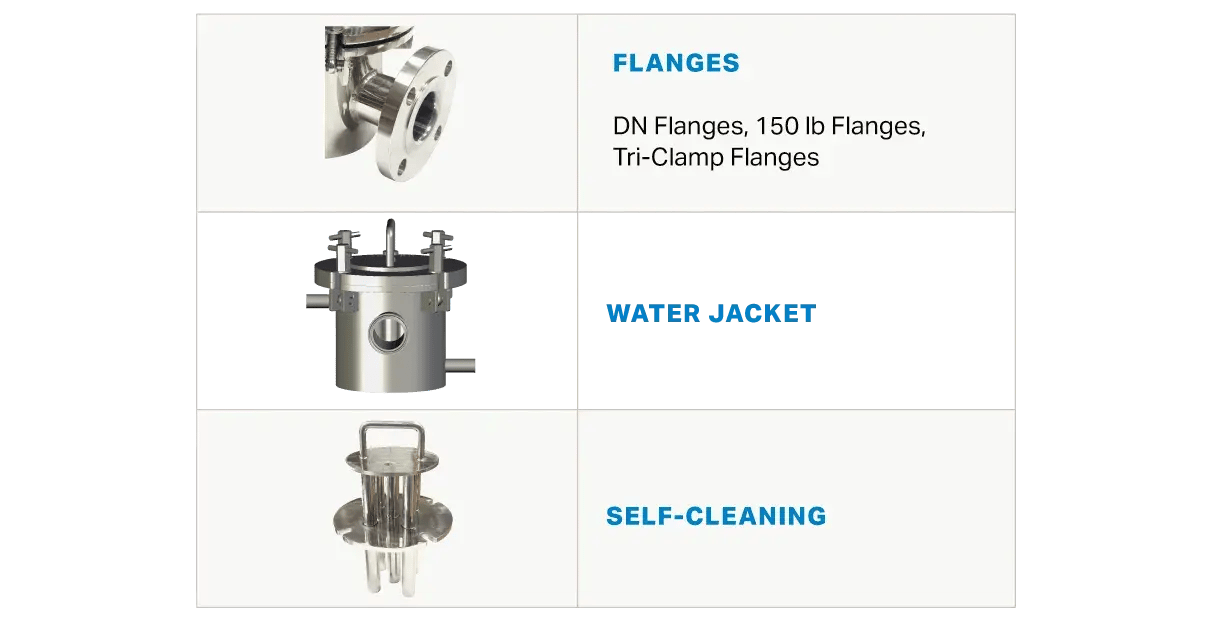
Flange choices include DN, 150 lb and Tri-Clamp connections. Water-jacket and self-cleaning configurations are also available. Include your connection and cleaning requirements in the application inquiry.
Evaluate With Your Material
Material Testing For Your Application
Discuss testing with your material and target contaminant. Share your separation goal and process conditions so Bunting can review the appropriate test approach.
Application Review And Equipment Inquiry
Specify Your Liquid Separator
Tell us what you process and what you need to remove. A Bunting application engineer can review equipment fit, configuration and quotation requirements.
Useful Information To Include
- Material, viscosity, solids loading and product-piece size
- Target metal, particle size and contamination source
- Flow rate, line size and connection standard
- Normal and maximum pressure and temperature
- Cleaning procedure, product-contact requirements and access space
- Installation drawing, facility location and project timing
Request a current specification sheet and dimensional drawing for the configuration under review. For testing, describe the material and contaminant before arranging a sample shipment.
Discuss Your Application
Liquid Separator Questions
How Is Magnetic Separation Different From Inline Metal Detection?
A magnetic separator captures ferrous metal while product flows through the housing, retaining the captured metal on its magnetic rods. An inline metal detector detects ferrous, non-ferrous and stainless steel contamination and rejects affected product through a configured reject system. The two equipment types can work together to address different metal risks.
Explore Bunting Metal DetectionWill It Capture Stainless Steel?
Yes, some work-hardened stainless steel particles can be captured by the neodymium elements. Capture depends on the alloy, particle size and magnetic response. Inline metal detection complements the separator where non-magnetic stainless steel or other non-ferrous metal is a risk.
How Is The Magnetic Assembly Accessed For Cleaning?
The quick-release lid provides access to the removable magnetic assembly. The rods retain captured ferrous contamination for removal during cleaning. A self-cleaning arrangement is also available as an option.
Can The Separator Handle My Pressure And Temperature?
The separator has a pressure rating of 145 psi (10 bar) and temperature capability up to 248°F (120°C). Share normal and peak conditions, including pressure surges and cleaning temperatures, so Bunting can match the assembly and seals to your line.
Can I Get A Drawing Or Specification Sheet?
Include your line size, connections and operating conditions in the inquiry. Request a current configuration-specific specification sheet and dimensional drawing from Bunting.