
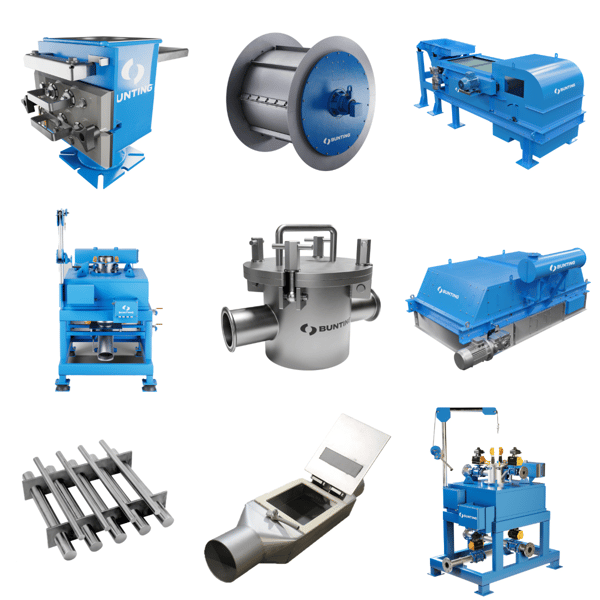
Choosing the right industrial magnetic separator vendor can directly impact plant uptime, product purity, equipment protection, and operating costs. Whether you operate in recycling, food processing, plastics, aggregates, mining, or manufacturing, selecting the wrong supplier can lead to contamination problems, maintenance issues, and costly downtime.
Plant managers should compare magnetic separator vendors based on application expertise, magnetic performance, engineering quality, service support, and long-term reliability rather than focusing only on initial price.
Why Vendor Selection Matters in Magnetic Separation
Industrial magnetic separators protect critical processing equipment, remove ferrous contamination, improve product quality, and recover valuable metals. However, not all magnetic separator manufacturers provide the same level of engineering support or equipment performance.
The best magnetic separator vendors offer:
- Proven application expertise
- High-performance magnetic circuits
- Durable industrial construction
- Fast technical support
- Long-term service and spare parts availability
- Custom engineered solutions
A poorly selected separator can reduce recovery efficiency, increase maintenance costs, and negatively affect production performance.
1. Evaluate the Vendor’s Industry Experience
One of the first things a plant manager should compare is the supplier’s experience within their specific industry.
| Industry | Common Magnetic Separation Requirement |
|---|---|
| Recycling | Ferrous recovery and equipment protection |
| Food Processing | HACCP compliance and fine metal removal |
| Plastics | Removal of small ferrous contaminants |
| Mining | Heavy-duty tramp metal protection |
| Wood Processing | Nail and shredder protection |
| Aggregate Processing | Conveyor protection and crusher protection |
An experienced magnetic separator manufacturer should understand:
- Your material characteristics
- Typical contamination challenges
- Industry regulations
- Operational requirements
- Common process bottlenecks
2. Compare Magnetic Separator Performance Properly
Many industrial magnetic separator suppliers focus heavily on gauss strength. However, magnetic field strength alone does not determine separation efficiency.
Magnetic Circuit Design
A properly engineered magnetic circuit creates deeper magnetic reach and stronger contaminant capture across the material burden.
Pole Spacing
Correct pole configuration improves separation performance and material agitation.
Magnetic Field Depth
Effective separators generate usable magnetic force throughout the product stream, not just at the surface.
Magnet Type
- Ceramic magnets
- Rare earth magnets
- Neodymium magnetic separators
Rare earth magnetic separators are typically used for fine or weakly magnetic contamination.
3. Assess Equipment Build Quality
Industrial magnetic separators often operate in demanding environments involving:
- Abrasive materials
- Dust
- Heat
- Moisture
- Corrosive conditions
- Continuous operation
Poorly constructed equipment can lead to excessive maintenance and premature failure.
Key areas to evaluate include:
- Heavy-duty fabrication
- Industrial-grade bearings
- Reliable belt tracking systems
- Wear resistance
- High-quality welds
- Robust support structures
4. Compare Maintenance and Cleaning Requirements
Maintenance accessibility directly affects operational efficiency.
Plant managers should evaluate:
- Cleaning frequency
- Ease of inspection
- Access for maintenance
- Spare parts availability
- Downtime requirements
Self-Cleaning vs Manual Cleaning
Self-cleaning magnetic separators automatically remove captured ferrous metal continuously, making them ideal for high-volume processing lines.
Manual-clean magnets may be suitable for lower throughput operations or intermittent contamination.
5. Assess Engineering and Customization Capabilities
No two processing plants are identical. A strong magnetic separator supplier should be capable of providing custom solutions where necessary.
Custom engineering may include:
- Custom conveyor widths
- Bespoke chute magnets
- High-temperature designs
- ATEX-certified equipment
- Sanitary magnetic separators
- Integrated conveyor systems
- Retrofit solutions
Bunting engineers custom magnetic separation systems tailored to individual processing applications and facility layouts.
6. Review Technical Support and After-Sales Service
Technical support is one of the most important factors when comparing magnetic separator vendors.
Plant managers should compare:
- Technical support response times
- Field service availability
- Spare parts inventory
- Installation support
- Commissioning assistance
- Preventative maintenance programs
7. Compare Total Cost of Ownership
The cheapest magnetic separator may become the most expensive option over time.
Plant managers should evaluate:
- Maintenance costs
- Energy usage
- Downtime risk
- Equipment lifespan
- Product loss prevention
- Recovery efficiency
- Spare parts costs
8. Check Compliance and Safety Standards
Many industries require magnetic separation equipment to meet specific standards and certifications.
- HACCP compliance
- FDA-compliant materials
- ATEX certification
- CE marking
- OSHA safety requirements
9. Ask About Material Testing and Validation
Leading magnetic separator manufacturers often provide testing services before recommending equipment.
Testing can include:
- Material sample analysis
- Laboratory testing
- Pilot testing
- On-site trials
At Bunting, we regularly conduct material testing to help customers identify the most effective magnetic separation solution for their application.
Frequently Asked Questions
Need Help Choosing the Right Magnetic Separator?
Bunting designs and manufactures industrial magnetic separators for recycling, plastics, food processing, mining, aggregates, and manufacturing industries worldwide.
Contact our team today to discuss your application and find the most effective magnetic separation solution for your operation.
Contact Bunting