

Over 18 months, Bunting supplied 15 Magnetic Liquid Traps to Spanish citrus juice producers to remove fine iron from orange and grapefruit juice. High-strength rare earth magnets capture and hold ferrous contamination before it can continue through production.
Fine Iron Contamination in Orange Juice
Metal contamination in food processing is common, although its source can be difficult to identify. In fruit juice production, fine iron can enter during harvesting, transportation, or processing:
- Harvesting and picking: Dirt can contain magnetic particles and remain on fruit surfaces.
- Transportation: Rust, metal dust, and dirt can enter from transport equipment, even when fruit is collected in plastic containers.
- Processing: Slicing, squeezing, and other extraction stages can create fine metal through equipment wear.
Capturing Metal Contamination
Fine iron can be difficult to capture. For effective separation, the juice must flow close to high-strength neodymium rare earth magnets.
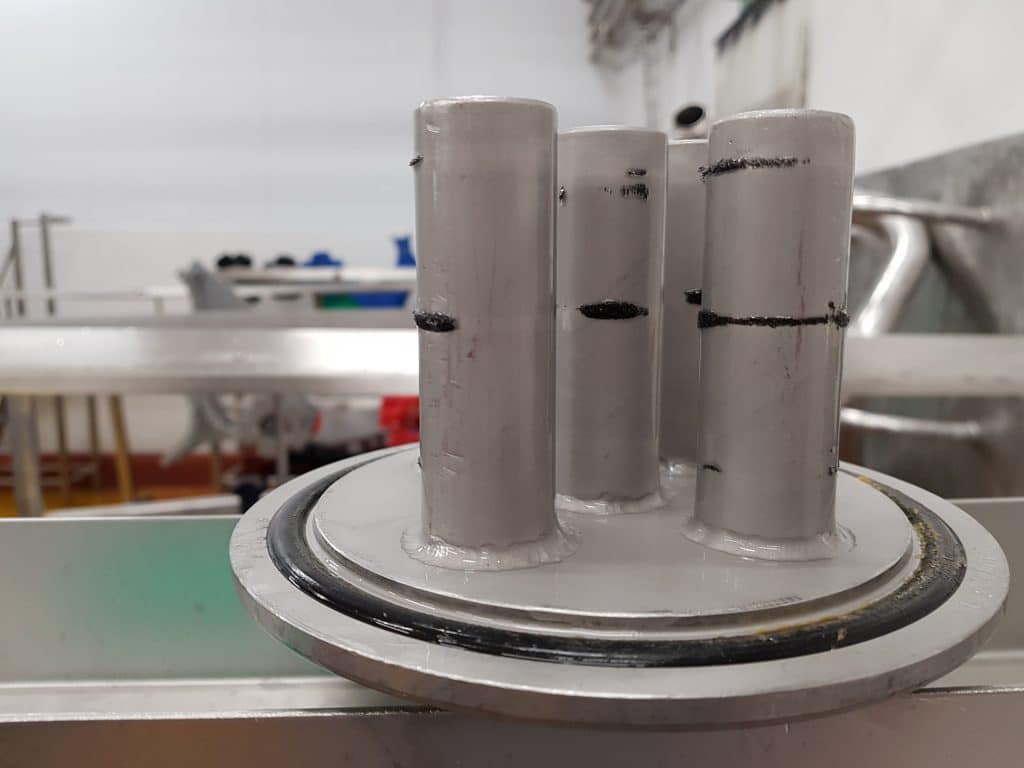
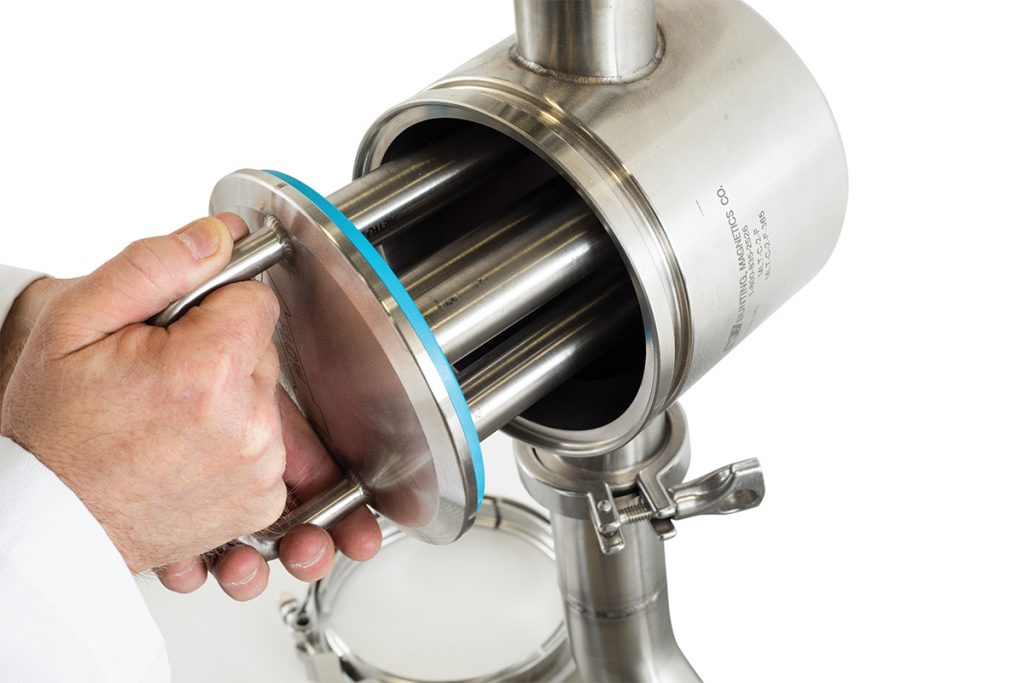
Bunting's Magnetic Liquid Traps force juice through a tightly spaced array of tube magnets to maximize contact. Fine iron and other ferrous contaminants, including nails, nuts, and rust, are attracted to the magnet surfaces and held securely so they cannot return to the juice.
Operators clean captured metal from the tube magnets at intervals based on contamination levels. The lid and attached tube magnets are removed from the trap body, and the collected iron is wiped away manually.
- Technical Product Information: Magnetic Liquid Traps
Protecting Welds Against Acidity
Fruit juices are naturally acidic, typically ranging from pH 2.0 to 4.8. This acidity can corrode standard welds, so the tube magnets are welded to the trap lid using food-grade methods.
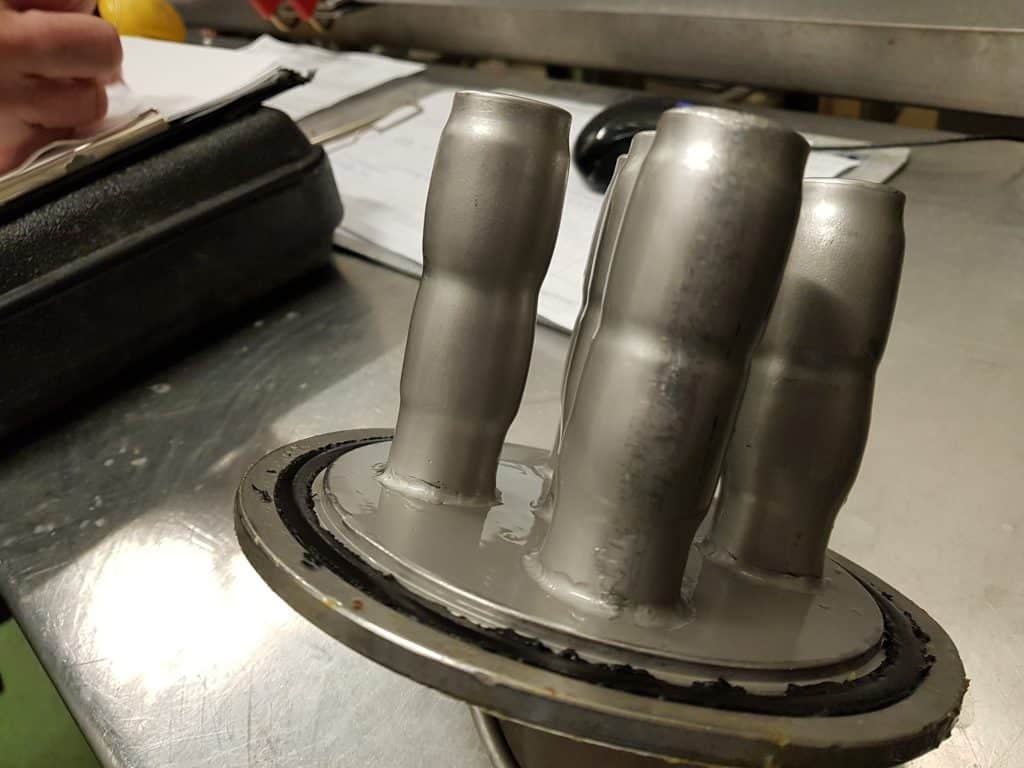
Standard welding materials can pit and corrode after prolonged exposure to acidic liquids. If a weld fails, liquid can enter the tube magnet casing, damaging the magnets and causing them to swell, lose strength, or split the outer casing.
Bunting Magnetic Liquid Traps use specialized welds designed to prevent this damage.
Magnetic Separators for the Food Industry
Magnetic Liquid Traps are part of Bunting's range of magnetic separators for food processing. The range includes systems for wet and dry products, as well as belt, gravity, and pneumatic conveying applications.
Related Metal-in-Food Technical Articles
For information about magnetic separators for fruit juice or other food-processing applications, visit the website or contact Bunting:
Email: Gordon Kerr at GKerr@buntingmagnetics.com
Telephone: +44 (0) 1527 65858
Follow us on social media