
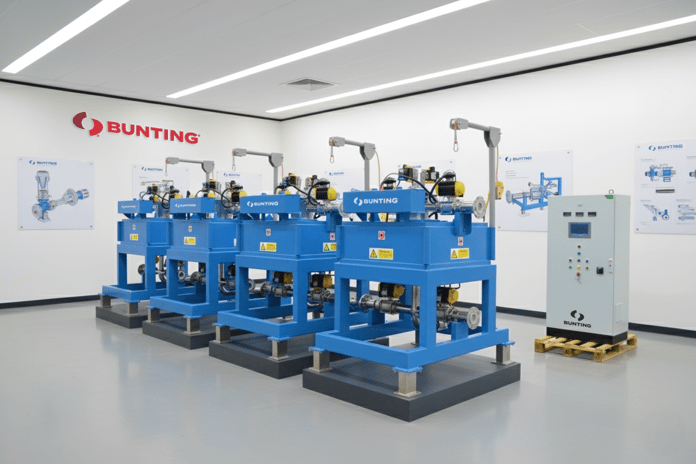
Case Study / Magnetic Separation
Removing Stainless Steel from Recycled Plastic with a Stainless Steel Separator
A UK Midlands plastic recycler already had ferrous separation in place, but their magnetic separators were not removing the stainless steel. Following successful testing at Bunting's test facility, they hired an SSSC Stainless Steel Separator for a week, and by the end of it they did not want to give it back.
Explore the Solution ↓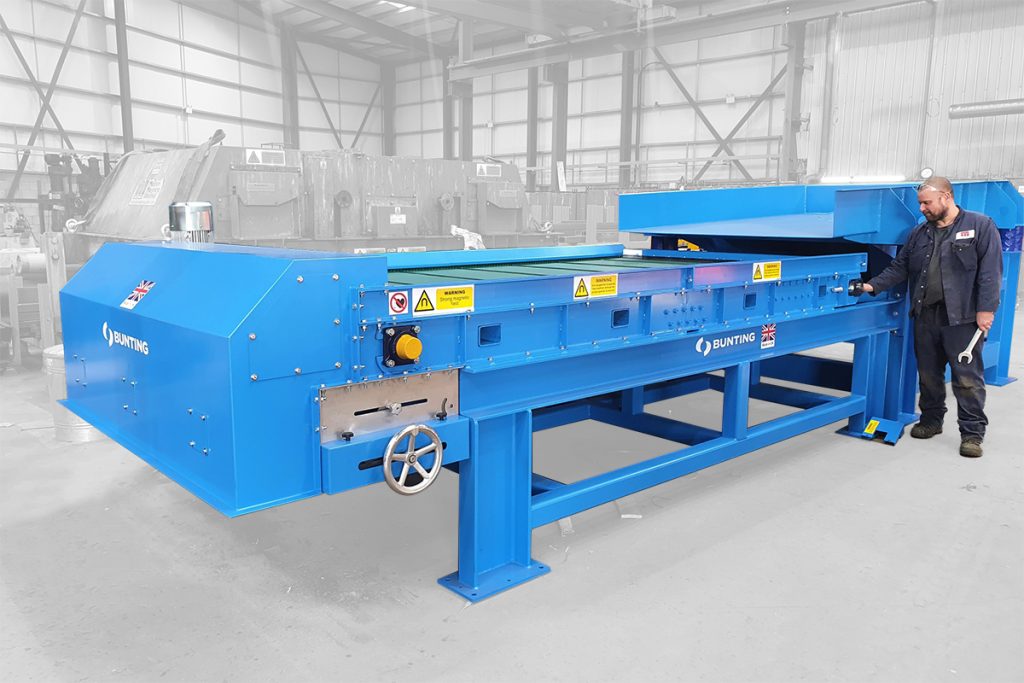
At a Glance
One Separator, Two Results
Removing the stainless steel made the plastic cleaner. Recovering it as a separate fraction turned a contaminant into a second source of revenue.
Equipment
1 x SSSC
Belt Width
900 mm
Hire Period
1 week
The recycler could see the difference the SSSC made to their material. After one week's hire, they decided they did not want to run the plant without it.
The Challenge
Ferrous Metal Removed. Stainless Steel Left Behind.
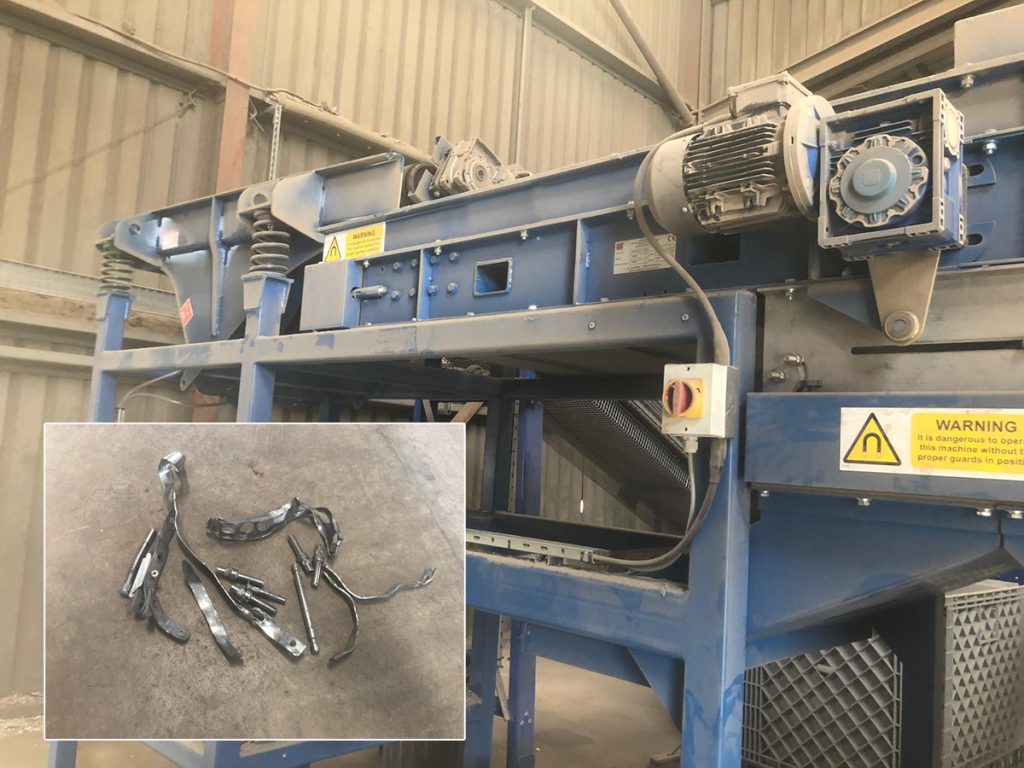
The recycler's existing magnets were removing ferrous metal well. Fragmented stainless steel was a different problem. Because it is only weakly magnetic, the magnets did not separate it, and it remained in the plastic.
The customer wanted a cleaner end product, and a clean stainless steel fraction they could sell as an additional revenue stream.
The Engineering Solution
Proving the Separation on Their Own Material
Successful separation depends on the material being processed, including its particle size, composition and how it is fed. Testing with the customer's own material was therefore an important part of confirming that the SSSC was suitable and how well it would perform.
01 / Test Facility
Application Testing at Bunting, Redditch
The first assessment took place at Bunting's full-scale test facility in Redditch. The customer's recycled plastic was run through an SSSC to evaluate how much fragmented stainless steel it recovered and the quality of the separated material.
Because the test used the customer's actual material, with feed conditions and particle sizes representative of their process, the results reflected what the separator would do in their plant.
02 / One-Week Hire
Proving Performance in Production
Following the successful tests, the customer hired a 900 mm wide SSSC for a one-week production trial at their own site.
Under real operating conditions, it produced a cleaner plastic fraction and recovered the stainless steel as a separate material stream. That stainless steel could be sold, adding a revenue stream on top of the improvement in plastic quality.
The customer was impressed enough with the results to keep the hired unit and buy it.
How It Works
Where the SSSC Fits in the Separation Process
The SSSC is a two-pulley conveyor with a specially designed, high-strength neodymium rare earth magnetic roll, whose magnetic field reaches further than a traditional rare earth roll. Conventional ferrous separators are designed mainly to remove strongly magnetic materials. The SSSC is engineered to recover weakly magnetic metals, including fragmented stainless steel.
A vibratory feeder presents the material to the SSSC in a controlled, consistent flow onto the belt. As the material passes over the magnetic roll, susceptible stainless steel particles are attracted and separated from the non-magnetic plastic.
The SSSC is normally installed after the primary ferrous separation equipment, because strongly magnetic particles would interfere with its operation.
Application Questions
Removing Stainless Steel from Recycled Plastic: Questions and Answers
Why Did the Existing Magnets Not Remove the Stainless Steel?
Conventional ferrous separators are designed to attract strongly magnetic materials, such as iron and mild steel. Many grades of stainless steel are much less magnetic, depending on their composition and processing history.
As a result, fragmented stainless steel can remain in the material after conventional ferrous separation. The SSSC's specially designed, high-strength neodymium rare earth magnetic roll recovers susceptible stainless steel particles that would otherwise be difficult to separate.
Can the Recovered Stainless Steel Be Sold?
Yes. The SSSC separates recoverable stainless steel into its own fraction, so it can be collected for further handling and resale.
In this application, the recovered stainless steel gave the recycler an additional revenue stream, helping to offset the investment in the separator while improving the quality of the recycled plastic.
Why Test with Your Own Material?
Separation performance depends on several factors specific to each application, including the stainless steel grade, particle size, material composition, moisture content and how the material is fed.
Testing representative samples at Bunting's facility lets these variables be assessed, so you can see the likely separation performance before equipment is specified.
For more information, explore Bunting's range of stainless steel separators.
The Bunting Difference
Proven on Your Material. Confidence Before You Invest.
Every recycling application is different, and the right separation depends on the material, particle size and process conditions.
At Bunting's full-scale test facility in Redditch, customers can put their own material through our separation equipment and see the results first-hand. For this recycler, testing at our facility gave them the confidence to take the next step, and a one-week hire proved the benefits in their own plant.
The results spoke for themselves. Cleaner plastic and recoverable stainless steel gave a clear commercial benefit, and the SSSC became an essential part of their process.
Family owned since 1959, with decades of magnetic separation experience and in-house testing and engineering expertise, Bunting can help you find the right solution for your recycling application.
Still finding stainless steel in your recycled plastic? Bring your material to Bunting and see what better separation could achieve for your process.
Test with your material at our facility →