
CHALLENGE
Ingredient purity is critical in food production.
A soy product producer in Kansas was processing protein additives used in food. Even trace metal contamination could compromise product quality and introduce downstream risk.
Every batch had to be metal free. No exceptions.
Manual checks left too much to chance, and the process required continuous inspection that would not slow production.
SOLUTION
Automated inspection ensured consistent product protection.
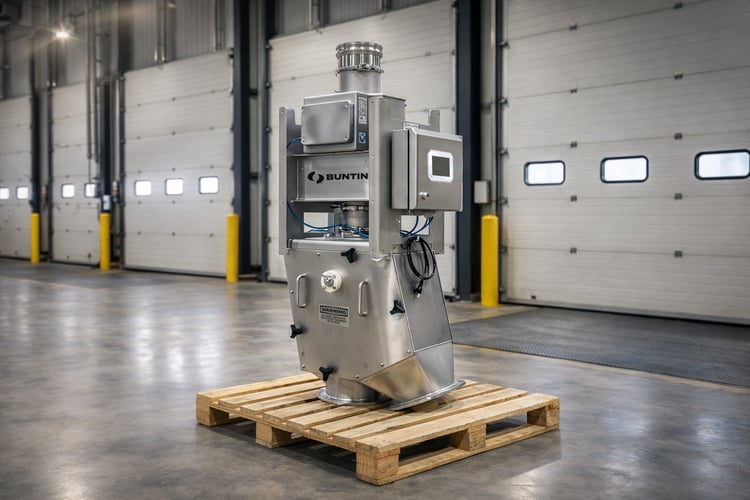
Bunting supplied a Gravity Fall Metal Detector, Performer GF B special version, configured specifically for protein additive inspection.
The system inspects product as it flows through the process. When metal is detected, the contaminated material is automatically rejected or diverted from the product stream.
This provides immediate removal without interrupting production or requiring manual input.
SYSTEM DESIGN
Designed for continuous inspection in a high-throughput process.
The Gravity Fall Metal Detector was integrated directly into the production line, allowing for uninterrupted product flow while maintaining full inspection coverage.
Automatic rejection ensures that contaminated material is removed instantly, while time-stamped data supports traceability and food safety reporting.
RESULT
Reliable, continuous protection of product quality.
With the system in place, the producer achieved consistent inspection of protein additives and immediate removal of contaminated product.
The automated process improved confidence in ingredient quality while maintaining production efficiency.
Time-stamped records also provided valuable support for food safety documentation and audits.
WHY IT MATTERS
In food production, there is no room for compromise.
Automated metal detection removes uncertainty from the process, ensuring that every batch meets strict quality standards without slowing production or relying on manual checks.
FREQUENTLY ASKED QUESTIONS
1. What is a gravity fall metal detector used for?
A gravity fall metal detector is used to inspect dry, free-flowing products such as powders and granules as they move through a vertical processing line. It detects and removes metal contamination without interrupting production.
2. How do food manufacturers detect metal contamination in ingredients?
Food manufacturers use metal detectors installed at critical control points in the process. These systems automatically identify and reject contaminated product, ensuring food safety and compliance with industry standards.
3. Why is metal detection important in protein additives?
Protein additives are used in food products where purity is essential. Even small amounts of metal contamination can affect product quality, safety, and compliance, making reliable inspection critical.
4. Does metal detection slow down production?
No. Modern systems like gravity fall metal detectors operate in-line with production, providing continuous inspection and automatic rejection without reducing throughput.