

Case Study / Metal Detection
Detecting Metal in 10 kg Packs of Tissue Filler for Baby Diapers
Bunting supplied three Performer Elite DCM conveyor metal detectors to a paper mill in Egypt to inspect packed tissue used as the filler in disposable baby diapers. Each unit was specified to identify ferrous metal from 1.75 to 2.0 mm, non-ferrous from 2.0 to 2.5 mm and stainless steel from 2.5 to 3.0 mm in this application.
Explore the Solution ↓
Specified Sensitivity
Sensitivity Specified for 10 kg Packs
The detectors were specified to find small ferrous, non-ferrous and stainless steel contaminants in 10 kg packs.
Ferrous
1.75 to 2.0 mm
Non-Ferrous
2.0 to 2.5 mm
Stainless Steel
2.5 to 3.0 mm
Detection sensitivity in millimeters, as specified for this product and system configuration.
The Challenge
Large Packs. Small Contaminants. Simple Operation.
The mill produces tissue paper used as the absorbent filler in disposable diapers, a product worn against a baby's skin. Metal in the filler had to be found before the packs left the plant.
The customer wanted detectors that were simple to operate but could still find very small ferrous, non-ferrous and stainless steel particles in 10 kg packs, designed for about 40 packs per minute on each line.
The Engineering Solution
Detector and Conveyor Sized to the Pack
The three detectors are identical in size and specification. Each conveyor was built to suit the line it serves.
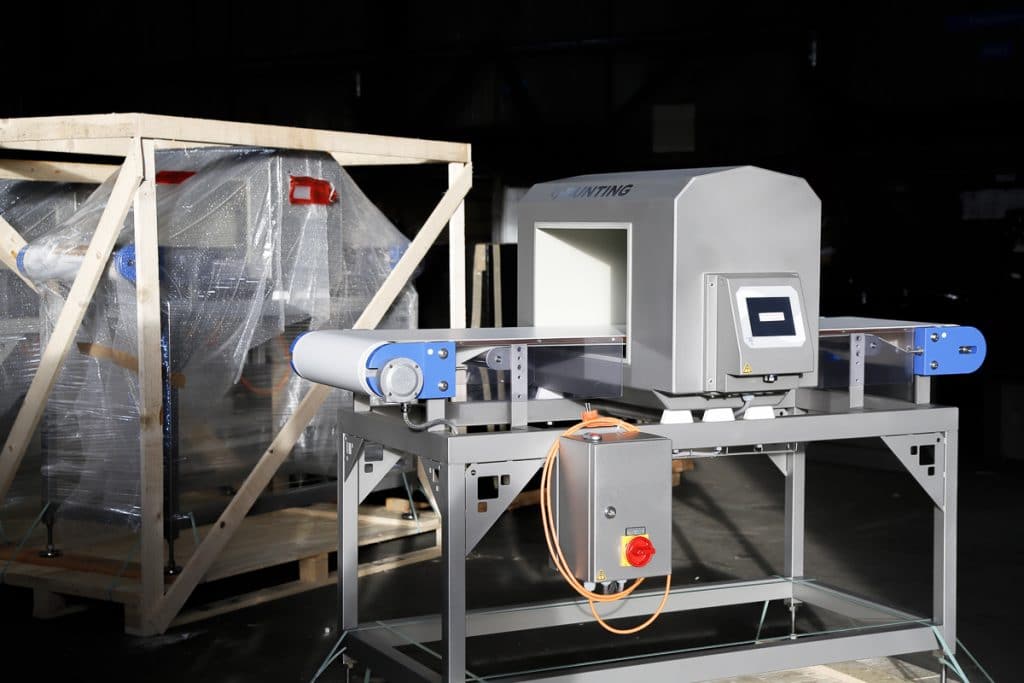
01 / Aperture Size
An Aperture Matched to the Pack
A 400 mm wide belt runs through a 450 x 300 mm aperture, just large enough for the 355 mm wide, 200 mm high packs. Keeping the aperture close to the pack size helps hold sensitivity on small particles.
02 / Detection Stability
Consistent, Protected Performance
Auto-balancing coils keep detection performance consistent. The closed tunnel housing is 304 stainless steel rated IP66, and settings sit behind a 5.7-inch color touchscreen with three password levels.
03 / Conveyor Integration
Conveyors Built to Fit Each Line
Each 1,700 mm conveyor was built at one of three heights (950, 1,050 and 1,150 mm). The nominal belt speed is 0.6 m/s, adjustable by plus or minus 40% through a frequency inverter, with start-stop and emergency stop controls.
Application Questions
Metal Detection for Packed Tissue: Questions and Answers
What Metal Detection Sensitivities Were Specified?
For this application, the detectors were specified to identify ferrous metal from 1.75 to 2.0 mm, non-ferrous from 2.0 to 2.5 mm and stainless steel from 2.5 to 3.0 mm. These figures apply to this product and system configuration.
Why Are the Conveyors Different Heights?
Each conveyor was built at one of three heights, 950, 1,050 and 1,150 mm, to suit the line it serves.
Can the Belt Speed Be Adjusted?
Yes. A frequency inverter allows the belt speed to vary by plus or minus 40% around the nominal 0.6 m/s, so the line can run at different pack rates.
Explore Bunting metal detection systems for related equipment options.
The Bunting Difference
Inspection Sized to Your Product
Bunting matched the aperture, conveyor and detector to a large, heavy pack while keeping the system simple for operators to run.
Family owned since 1959, Bunting brings decades of application and engineering experience to sizing inspection equipment around your product, pack size and line layout.
That experience is backed by our on-site, full-scale testing facility. Testing with your own product shows what sensitivity your packs allow before you specify equipment.
Inspecting large or heavy packs? Discuss your application and test with your material at Bunting.
Test with your material at our facility →